An Infor CPQ review and interview from long time configurator users, MOGAS industries. Director of IT at Mogas, Troy McDonald, and RenaissanceTech Founder, Jeremy Finley, discuss why this Engineer-to-order manufacturer chose Infor CPQ and how they are using it today. Watch Troy's Infor CPQ Review and Interview Below!
Troy proves that no process or product is too complex for CPQ. With the right enterprise software setup, and an experienced service team, any quoting and ordering challenges can be solved.
Looking for support in your product configurator and CPQ research? Talk to us today to see if Infor CPQ is the right fit for you.
This is an Infor CPQ excerpt pulled from this longer interview and webinar with our partner, SourceDay.
Using a Product Configurator and Dealer Portal software as a manufacturer can support the onboarding of new employees in several ways:
Standardization: Using a product configurator provides a standardized process for creating quotes and proposals, which helps new employees learn the process quickly and easily. It ensures that all quotes and proposals are consistent, accurate, and comply with company policies and procedures.
Centralized Database: A product configurator also stores all product information, pricing, and configurations in a centralized database, making it easy for new employees to access and understand the information. This eliminates the need for manual data entry, reducing the chances of errors and improving the overall efficiency of the onboarding process.
Automated Workflows: A configurator software streamlines the quoting and proposal process by automating workflows. This eliminates the need for new employees to manually create quotes and proposals, reducing the learning curve and improving productivity.
Training Materials: Many Configurator Sales Portals provide a place to store training materials, such as video tutorials and user guides, which can be used to onboard new employees quickly and efficiently. This allows them to learn the software, products, and features at their own pace.
In short, using a configuration software as a manufacturer can help new employees onboard faster, reduce errors, and improve productivity. It provides a standardized process for creating quotes and proposals, a centralized database for product information, pricing, and configurations, automated workflows, and training materials virtually stored to help employees learn the products quickly and easily.
2. You Can Configure Anything
Whether it be semi-configurable parts, assemble-to-order, or fully custom, any product can be added to the system. Product lines and parts are not the only thing to add; users can configure anything with the right setup.
Manufacturers can add contracts and items to create customized documents based on customer needs. And users can add and configure different service requests to quotes. This allows the sales team to include all necessary information and requests in one location.
3. Part Sales Are Always Managed
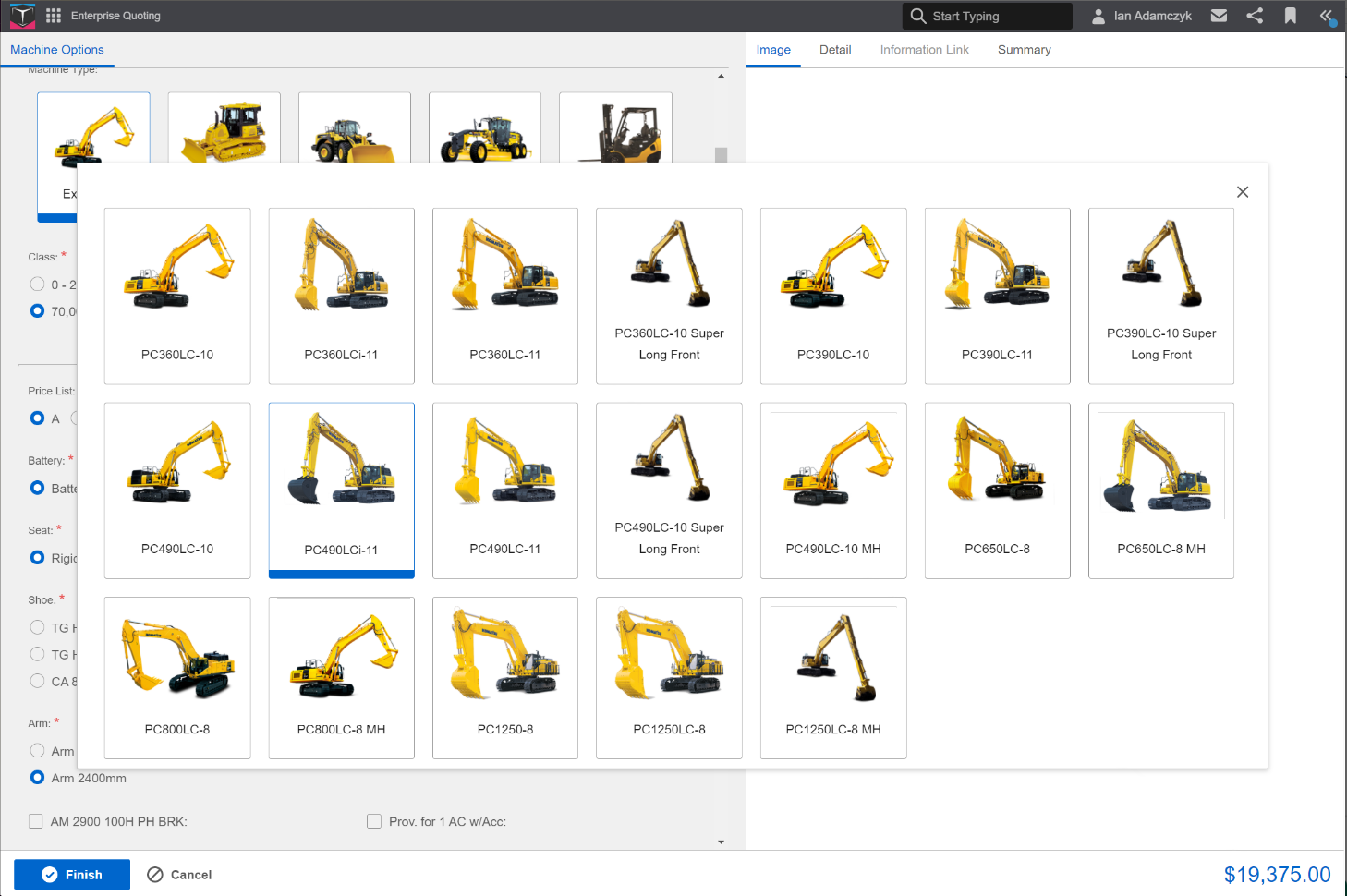
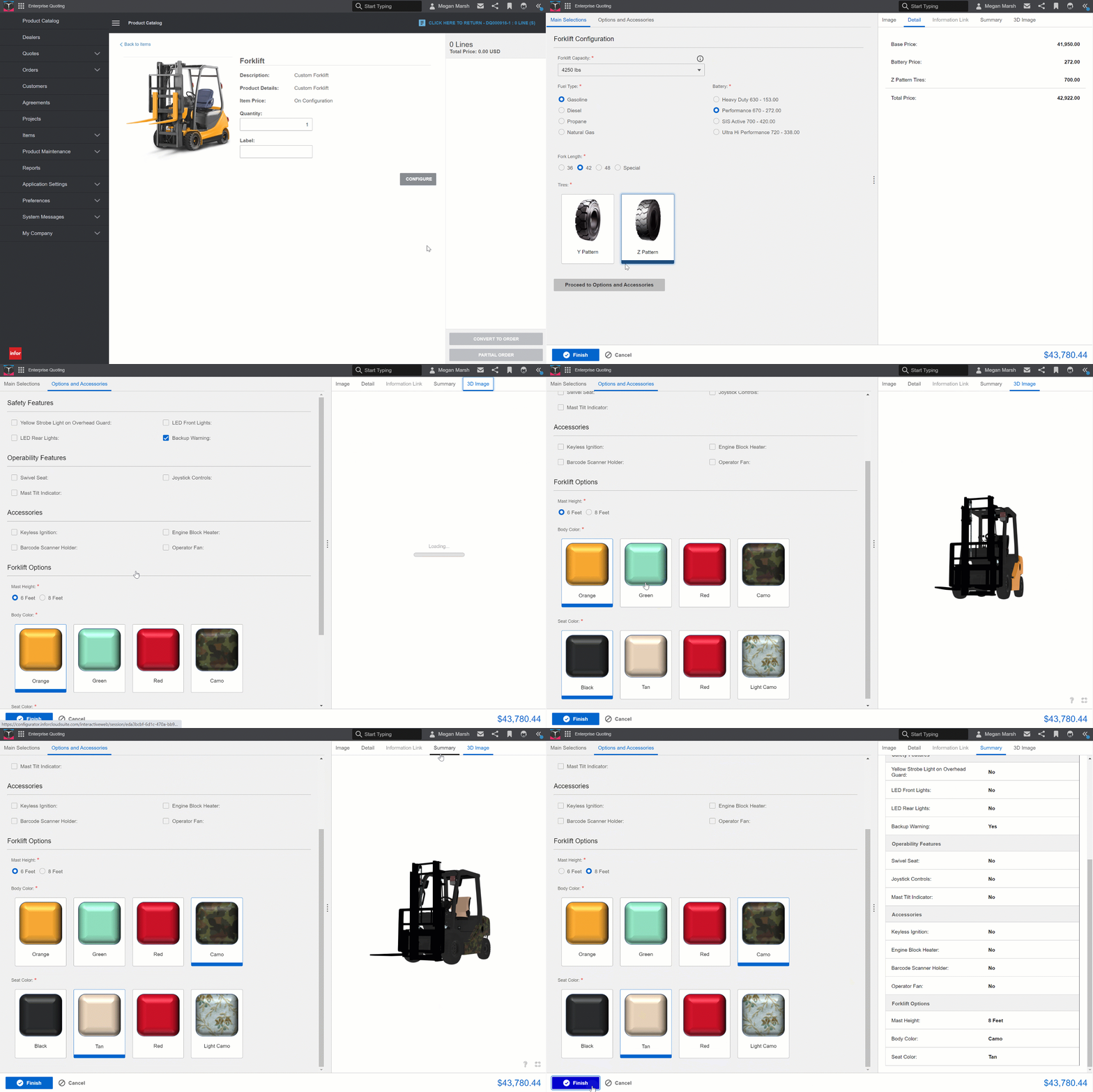
Catalog management: Manufacturers can use a configurator with a dealer portal to manage their product catalogs and configure them based on specific customer needs. They can define product attributes such as size, color, material, pricing options, and configure the parts accordingly or select non-configurable and spare parts additions.
Pricing and discount management: Manufacturers can use configurator software to manage their pricing and discounts for parts. They can define pricing rules based on different customer segments, geographic regions, or volume discounts. They can also define discounts for specific parts based on promotions or customer-specific pricing agreements.
Overall, a robust product configurator provides manufacturers with a powerful tool to manage part sales. It enables them to configure parts based on customer needs, manage pricing and discounts, and generate full quotes and proposals quickly. This can help manufacturers improve their sales processes, increase efficiency, and provide a better customer experience.
4. A Product Configurator Supports the Customer's Experience
In fact, If you don’t provide a customer experience that they expect, 89% of consumers will switch to a competitor.Now what does the modern day consumer expect? Customer’s expect a fast quote and ordering experience. If a dealer or sales rep does not provide a quote in a timely manner or doesn’t provide accurate information they will find a competitor that will. Consumers expect organized documentation and delivery of those items. If the proposal and ordering process is too confusing you will lose them to someone with a seamless workflow.
This is why it is so important to enable your sales and dealer team to quickly create quotes and proposals that are tailored to the customer's needs. They need to be able to quickly generate accurate quotes for parts based on the customer's configuration. When given a configurator and sales tools users can automatically calculate pricing based on the configured parts and apply any relevant discounts. This allows the sales team to create quotes and proposals quickly, improving the overall sales cycle.
5. Pulling Outside Data is Simpler Than You Thought
Not all product configurators are system agnostic – meaning that the technology can work independently of any specific system. This is a key benefit to systems compatibility and can be found with configurators like, Infor CPQ for example. When using an agnostic product configurator manufacturers can be confident in the ability to integrate any system. Pull customer, part, pricing, routing information and more into your configurator from your other enterprise systems like a CRM or ERP. Overall, a system-agnostic approach can provide greater flexibility, compatibility, and scalability, as it allows technology solutions to work seamlessly across various platforms and devices.
Product configurators and dealer portals are growing in popularity due to the rising need for higher productivity. These tools eliminate bottlenecks in the sales cycle, allowing customers to see the right product, at the right time and at the right cost.
Thanks for reading. Need some support in your product configurator research? With over 15 years of experience in the manufacturing industry, RenaissanceTech will answer any additional configurator questions you have. Talk to us today!
The SUN conference is an annual event where Infor SyteLine ERP software users from around the world gather to share their knowledge, experience, and best practices. The conference is a great opportunity to learn new techniques, discover new features and tools, and network with peers.
This year's conference had an impressive lineup of keynote speakers, including industry experts and leaders, who provided valuable insights into the current state and future of the manufacturing industry. The keynote speeches were thought-provoking and inspiring, and they helped attendees gain a deeper understanding of the challenges and opportunities facing the manufacturing sector.
The conference also offered a variety of breakout sessions and workshops on different topics, including product demonstrations, customer success stories, and hands-on training. These sessions provided a fantastic opportunity to learn new skills and techniques, as well as connect with other SyteLine users and experts.
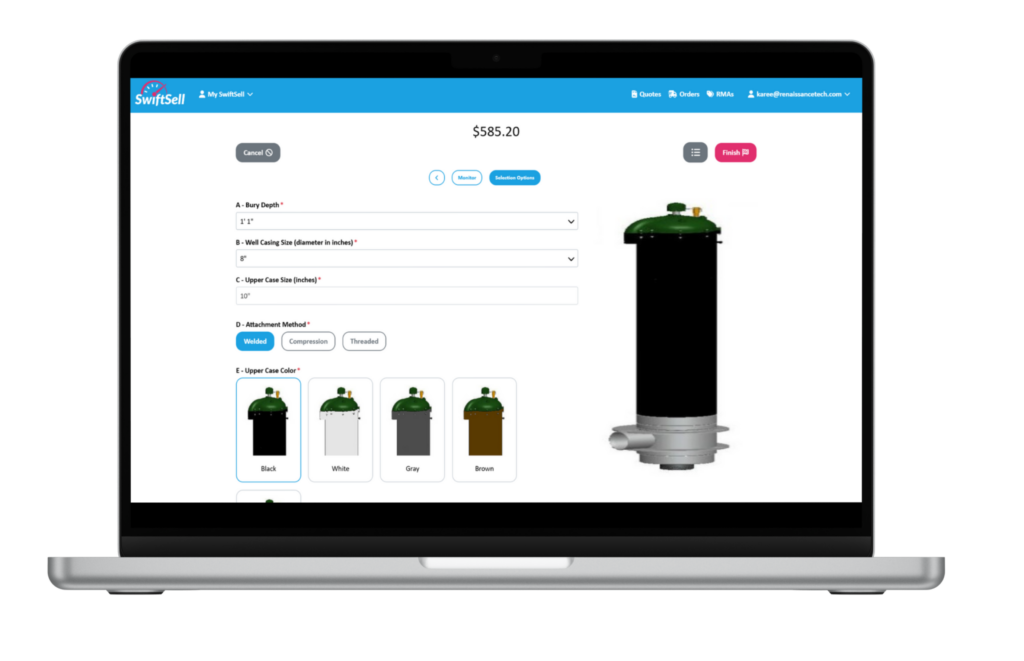
One of the highlights of the conference was the opportunity to network with other attendees, exhibitors, and experts. Our team at RenaissanceTech brought in an espresso cart for everyone to enjoy while networking. The conference provided an excellent platform to share ideas, best practices, and experiences. We featured the newest ecommerce and dealer platform built for Syteline, SwiftSell, at our booth.
In conclusion, attending the 2023 Syteline User Network (SUN) conference was an incredible experience. The conference provided a wealth of knowledge, insights, and networking opportunities that will be invaluable to SyteLine users. If you're a SyteLine user, I highly recommend attending the SUN conference in the future. The SUN 2024 conference will be in Tampa, FL next year.
Ecommerce for manufacturers is no longer optional; it's a core strategy for growth. By selling directly through online platforms, manufacturing companies can streamline sales, expand their reach, and deliver a better customer experience.
At its core, manufacturing ecommerce means setting up an online store or B2B portal where customers can browse, configure, and purchase products. Integrated with back-end systems like inventory management, order fulfillment, and CPQ (configure, price, quote) tools, ecommerce helps manufacturers operate more efficiently while boosting revenue.
What is Ecommerce for Manufacturers?
Ecommerce for manufacturers refers to using online platforms to sell products directly to consumers (B2C) or to other businesses (B2B). It helps manufacturers reach a wider audience, increasing sales and improving customer satisfaction by providing a convenient, easy-to-use online shopping experience.
Providing a digital buying experience for both B2C and B2B reduces the workload on internal teams and provides opportunity for growth around the clock. Manufacturers can reap the benefits of:
Reaching a wider customer base
A virtual storefront that sells 24/7
Automation of shipping, tax, and payment processes
Reduction of reliance on sales reps for standard orders
This shift to industrial ecommerce is transforming how manufacturers interact with customers, distributors, and global markets.
7 Ways Manufacturers Use Ecommerce
Manufacturers are leveraging ecommerce manufacturing solutions in multiple ways:
Online Storefronts: Setting up an online store where customers can browse and purchase products. Features often include product configurators, real-time inventory updates, and automatic shipping and tax calculations.
Direct-to-Consumer (B2C) Sales: Manufacturer ecommerce platforms allow companies to sell directly to consumers, expanding reach beyond dealers and distributors and boosting margins.
B2B Ecommerce for Manufacturers: For B2B transactions, manufacturing ecommerce systems offer custom pricing, volume discounts, and account management tools for business.
Integrated Order Fulfillment: Ecommerce platforms can sync with ERP and warehouse systems, ensuring fast, accurate shipping.
Enhanced Customer Service: From FAQs to product manuals, ecommerce portals provide self-service resources and order tracking, reducing the load on support teams. Customers can access product manuals, FAQs, and other resources, as well as request returns or exchanges.
Marketing and Advertising: Using analytics and customer data, manufacturers can launch targeted campaigns, personalized promotions, and retargeting ads.
Global Market Expansion: Industrial ecommerce platforms allow manufacturers to expand internationally, reaching new customers worldwide.
The Role of CPQ in Manufacturing Ecommerce
CPQ for ecommerce (Configure, Price, Quote) tools are especially valuable for manufacturers selling complex or customizable products. They let buyers build their own product configurations online while automatically generating accurate pricing and quotes.
This integration reduces errors, speeds up the buying process, and enhances the overall ecommerce experience.
Conclusion
Ecommerce for manufacturers is revolutionizing the industry by driving efficiency, sales growth, and customer satisfaction. Whether through B2C, B2B, or global expansion, manufacturers that embrace ecommerce are better positioned to compete in today’s digital-first economy. Want to see our B2B and B2C ecommerce platform for manufacturing platform firsthand? Learn more about our product, SwiftSell, here, or schedule a demo below!
Selecting a new Configure Price Quote (CPQ) system is a big decision. This decision requires forethought for how you do business today and what your company wants for its future. Using a few key CPQ software selection criteria for configuration tools, you can find the right solution to grow your business.
There is a wide range of cloud configurators available to many different types of businesses. By defining clear selection criteria for CPQ solutions, you can easily narrow down a list of candidates that will fit your business best.
Portrait of a worker at large metal industry workshop.
Important Criteria for CPQ Software Selection
You’ll first want to think about where your business is and its future growth trajectory. Your CPQ system can be as light or robust as the products and businesses you support. It’s best to take into consideration a CPQ tool that includes a future-oriented perspective.
Company resources - It's important to note your company’s current operations, people, and processes. Also, consider the impact of a new system on company resources. What tasks can you automate with CPQ implementation or a new system? Putting new systems in place will require implementation time that should provide a future payout for your company resource goals.
Cost - The cost of a new ERP system is certainly a factor in your decision. As you compare the costs of CPQ systems, be sure to look at the ROI (return on investment) and proven automation capabilities of each cloud configurator.
Cloud vs. on-premise - Many companies are turning to Cloud CPQ because of its updated infrastructure, security advantages, and flexibility. CloudSuite CPQ solutions eliminate the need for ongoing investment in in-house servers. For more information on cloud vs. on-premise CPQ solutions, check out: Cloud vs. On-Premise CPQ: Key Differences, Risks, and Benefits
Implementation support - As stated above, your CPQ implementation effort is a major factor when selecting a CPQ system and can dictate how fast your software returns investment. That’s why choosing a reliable CPQ partner with industry experience, technical knowledge, and project management skills is critical. The greatest CPQ implementation partners have a deep understanding of companies similar to your own and have current customers providing excellent results and references. Above all, think of this as a critical decision for a working relationship in your CPQ software selection process.
Schedule a Meeting with Our Cloud Configurator Experts
As you dig into your CPQ selection process, we would like to offer our support in discussing your business’s goals and objectives for CPQ. Please feel free to schedule a meeting with one of our CPQ experts today.