







The Future of Manufacturing: Why CPQ is Essential for Efficiency

The Future of Manufacturing: Why CPQ is Essential for Efficiency
Simplify, Streamline, Succeed: How CPQ Supercharges Manufacturing

Manufacturing is all about efficiency and precision, but let’s be honest—achieving that isn’t always easy. One of the biggest challenges manufacturers face is figuring out how to streamline processes without sacrificing quality. This is where Configure Pricing and Quoting (CPQ) solutions step in. They’re a game-changer, especially when it comes to tackling the necessary but time consuming headaches of manual order entry, creating Bills of Materials (BOM), and routing processes. Let’s dive into why CPQ is such a must-have tool and how it can transform the way you run your business.

Why Manual Processes Hold You Back

If you're still relying on manual order entry, you're far from alone—but it's a significant problem. Data entry mistakes can trigger a series of issues, such as misallocated materials, inventory mismatches, pricing errors, delays in lead times, and missed delivery deadlines. These mistakes not only create frustration but also drive up costs, damage customer relationships, and slow down operations. In today's fast-paced, competitive landscape, manual processes are no longer viable.

BOM and Routing: The Foundation of Manufacturing

A solid manufacturing process starts with accurate BOMs and routings. The BOM lists all the components needed to build a product, while routing defines the steps required to make it. Getting this right is crucial for:

  • Allocating materials efficiently.
  • Managing inventory effectively.
  • Setting accurate prices.
  • Planning production schedules.
  • Delivering on time.

When BOMs and routings are off, the whole production line can suffer—causing delays, cost overruns, and even quality issues. These are headaches no manufacturer wants to deal with.

How CPQ Makes the Difference

CPQ solutions bring a level of automation and accuracy that can transform your business. Here’s how they help:

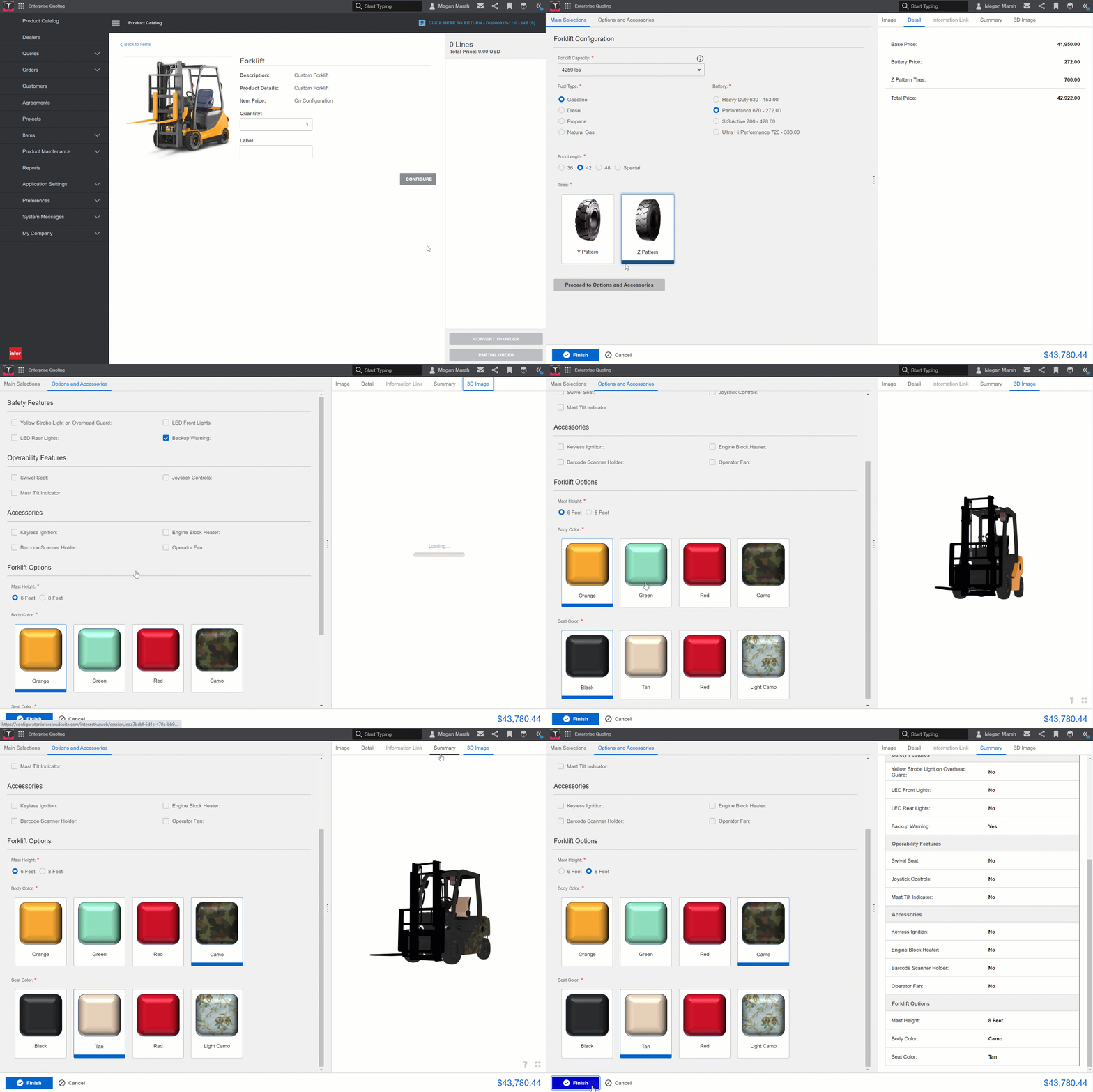
  1. Eliminate Manual Order Entry Errors: With CPQ, order configurations are accurate right from the start, cutting down on miscommunications and mistakes.
  2. Automate BOM and Routing Creation: CPQ systems automatically generate BOMs and routings based on the product configuration. This ensures consistency and speeds up production planning.
  3. Optimize Material Allocation and Inventory: CPQ integrates with inventory systems to align orders with real-time data, preventing overstocking or shortages.
  4. Standardize Pricing and Quoting: CPQ ensures prices are consistent, accurate, and reflect real-time costs, building trust and transparency with customers.
  5. Improve Lead Times and On-Time Delivery: By automating workflows, CPQ makes it easier to move seamlessly from quote to production, ensuring you meet deadlines.

Why Standardization Matters

While most manufacturing processes—like material procurement and production—follow similar patterns across industries, quoting is a different story. Every company has its own way of handling quotes, which can lead to inconsistencies. CPQ allows you to standardize and automate your unique quoting workflows, ensuring every quote aligns with your policies, pricing rules, and customer expectations. This consistency reduces errors, speeds up the sales process, and leaves your customers happier.

Looking at the Bigger Picture

CPQ is more than just a solution to everyday problems—it's a long-term investment in your business's success. By automating manual tasks and integrating BOM and routing creation, CPQ helps drive lower operational costs, higher production efficiency, better customer experiences, and ultimately, increased profitability.

The Bottom Line

In today’s fast-moving manufacturing world, CPQ is no longer a nice-to-have; it’s a must-have. Automating order entry, streamlining BOM and routing creation, and standardizing quoting workflows can supercharge the way you work. The result? A smoother manufacturing process, satisfied customers, and a business that’s ready to grow. If you haven’t explored CPQ yet, now is the perfect time to see what it can do for you.
5 Things Manufacturers Need to Know About Product Configurators

5 Things Manufacturers Need to Know About Product Configurators

Product configurator
Dealer portal software
Sales efficiency
Onboarding new employees
Automated workflows
Centralized database
CPQ for manufacturing
Catalog management
Pricing and discount management
Customer experience
Quote generation
Configure parts
Sales tools
System agnostic configurator
ERP integration
CRM integration
Customizable documents
Sales cycle improvement
Boosting productivity
Productivity tools for manufacturers

1. Everyone is a Sales Expert

Using a Product Configurator and Dealer Portal software as a manufacturer can support the onboarding of new employees in several ways:

Standardization: Using a product configurator provides a standardized process for creating quotes and proposals, which helps new employees learn the process quickly and easily. It ensures that all quotes and proposals are consistent, accurate, and comply with company policies and procedures.

Centralized Database: A product configurator also stores all product information, pricing, and configurations in a centralized database, making it easy for new employees to access and understand the information. This eliminates the need for manual data entry, reducing the chances of errors and improving the overall efficiency of the onboarding process.

Automated Workflows: A configurator software streamlines the quoting and proposal process by automating workflows. This eliminates the need for new employees to manually create quotes and proposals, reducing the learning curve and improving productivity.

Training Materials: Many Configurator Sales Portals provide a place to store training materials, such as video tutorials and user guides, which can be used to onboard new employees quickly and efficiently. This allows them to learn the software, products, and features at their own pace.

In short, using a configuration software as a manufacturer can help new employees onboard faster, reduce errors, and improve productivity. It provides a standardized process for creating quotes and proposals, a centralized database for product information, pricing, and configurations, automated workflows, and training materials virtually stored to help employees learn the products quickly and easily.

2. You Can Configure Anything

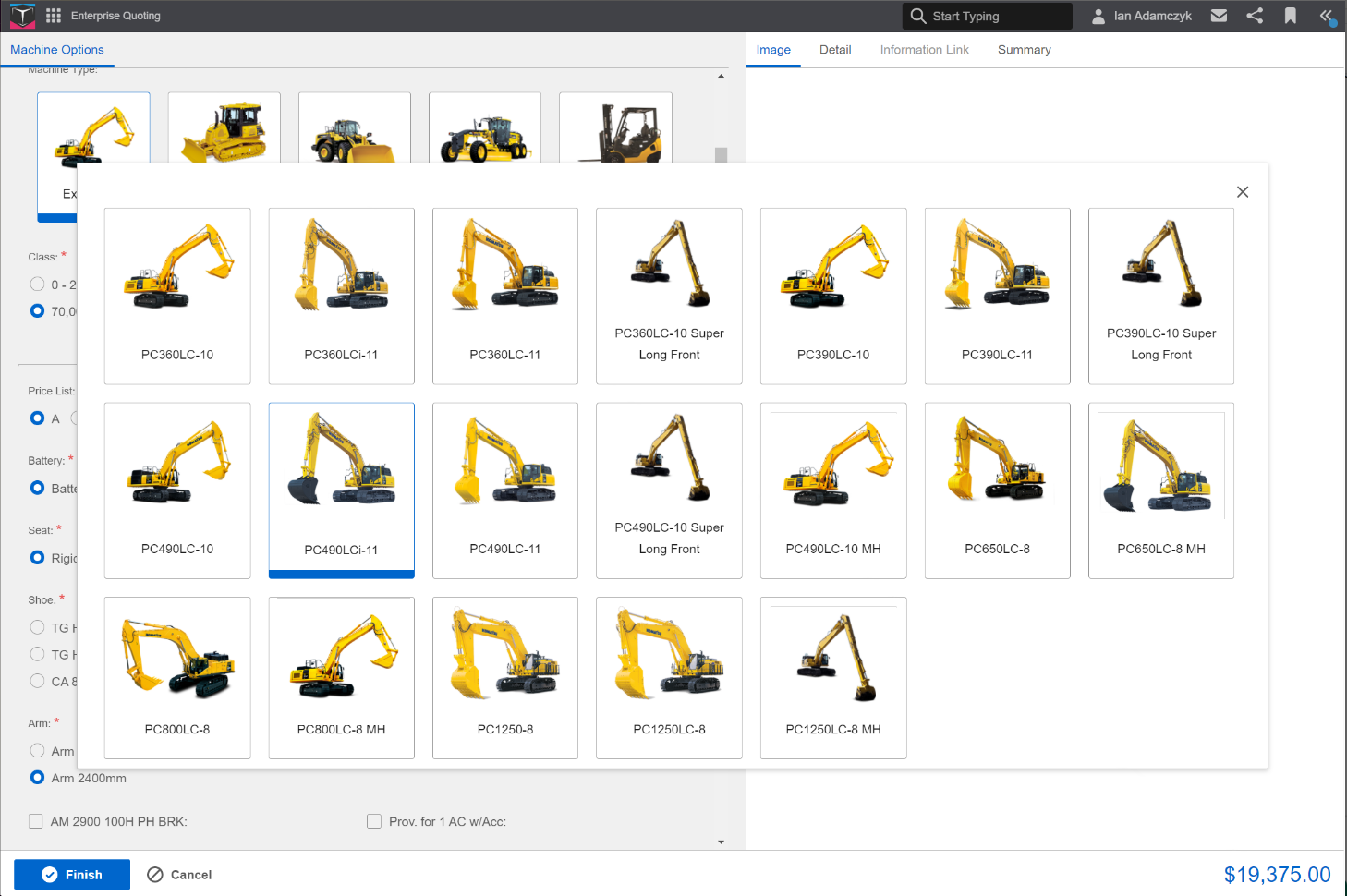
Whether it be semi-configurable parts, assemble-to-order, or fully custom, any product can be added to the system. Product lines and parts are not the only thing to add; users can configure anything with the right setup.

Manufacturers can add contracts and items to create customized documents based on customer needs. And users can add and configure different service requests to quotes. This allows the sales team to include all necessary information and requests in one location.

CPQ For Manufacturing
Product configurator
Dealer portal software
Sales efficiency
Onboarding new employees
Automated workflows
Centralized database
CPQ for manufacturing
Catalog management
Pricing and discount management
Customer experience
Quote generation
Configure parts
Sales tools
System agnostic configurator
ERP integration
CRM integration
Customizable documents
Sales cycle improvement
Boosting productivity
Productivity tools for manufacturers

3. Part Sales Are Always Managed

Catalog management: Manufacturers can use a configurator with a dealer portal to manage their product catalogs and configure them based on specific customer needs. They can define product attributes such as size, color, material, pricing options, and configure the parts accordingly or select non-configurable and spare parts additions.

Pricing and discount management: Manufacturers can use configurator software to manage their pricing and discounts for parts. They can define pricing rules based on different customer segments, geographic regions, or volume discounts. They can also define discounts for specific parts based on promotions or customer-specific pricing agreements.

Overall, a robust product configurator provides manufacturers with a powerful tool to manage part sales. It enables them to configure parts based on customer needs, manage pricing and discounts, and generate full quotes and proposals quickly. This can help manufacturers improve their sales processes, increase efficiency, and provide a better customer experience.

4. A Product Configurator Supports the Customer's Experience

In fact, If you don’t provide a customer experience that they expect, 89% of consumers will switch to a competitor. Now what does the modern day consumer expect? Customer’s expect a fast quote and ordering experience. If a dealer or sales rep does not provide a quote in a timely manner or doesn’t provide accurate information they will find a competitor that will. Consumers expect organized documentation and delivery of those items. If the proposal and ordering process is too confusing you will lose them to someone with a seamless workflow.

This is why it is so important to enable your sales and dealer team to quickly create quotes and proposals that are tailored to the customer's needs. They need to be able to quickly generate accurate quotes for parts based on the customer's configuration. When given a configurator and sales tools users can automatically calculate pricing based on the configured parts and apply any relevant discounts. This allows the sales team to create quotes and proposals quickly, improving the overall sales cycle.

5. Pulling Outside Data is Simpler Than You Thought

Not all product configurators are system agnostic – meaning that the technology can work independently of any specific system. This is a key benefit to systems compatibility and can be found with configurators like, Infor CPQ for example. When using an agnostic product configurator manufacturers can be confident in the ability to integrate any system. Pull customer, part, pricing, routing information and more into your configurator from your other enterprise systems like a CRM or ERP. Overall, a system-agnostic approach can provide greater flexibility, compatibility, and scalability, as it allows technology solutions to work seamlessly across various platforms and devices.

Product configurators and dealer portals are growing in popularity due to the rising need for higher productivity. These tools eliminate bottlenecks in the sales cycle, allowing customers to see the right product, at the right time and at the right cost.

Thanks for reading. Need some support in your product configurator research? With over 15 years of experience in the manufacturing industry, RenaissanceTech will answer any additional configurator questions you have. Talk to us today!