Simplify the Furniture Manufacturing buying process with Infor CPQ
The quoting process is a critical inflection point in the furniture manufacturing customer engagement cycle—and one of the factors that sets the tone for the entire customer experience. During a webinar presented by Infor, Kerry Davis, VP of North America Applications at Herman Miller, discussed what this $2+ billion company hoped to achieve through the implementation of advanced Configure Price Quote (CPQ) – and how Infor CPQ best equipped Herman Miller to meet the challenges of higher customer expectations in today’s omni-channel era.
According to studies by Aberdeen Group and Nucleus Research, furniture manufacturing companies see CPQ software as one of their primary weapons in combating declining sales, higher costs, and brand commoditization. By streamlining and automating the quote process, CPQ software can drive five-fold increases in revenue, nearly five percent increases in profitability, and boost customer retention by as much as 88 percent. It allows companies to follow-up more quickly on customer inquiries and accelerates the sales cycle dramatically. It also helps brands differentiate themselves through a richer, more responsive customer experience.
These findings echo Herman Miller’s expectations for its own CPQ implementation. Headquartered in Zeeland, Michigan, the company has an extensive network of manufacturing facilities in the United States, China, Italy, and the United Kingdom, with sales offices, dealers, licensees, and customers in over 100 countries. The company saw CPQ as the means to increase sales and quote-to-order conversion rates, and drive higher quote volumes and accuracy.
Herman Miller Increased Customer Engagement with CPQ Software.
Herman Miller’s product line is the antithesis of one-size-fits all. The company offers an array of options, sizes, and finishes that allow customers to get products tailored to their exact needs and specifications.
“Our Aeron chair, our most iconic chair, has 6 million SKU capabilities [options]. We are dealing with a ton of options on all of our products, we have lots and lots of data that feeds into
With Infor CPQ, Herman Miller was able to provide self-service capabilities for configuring special finishes and options, identify and order service parts, and order ancillary product from additional brands. Dealers can generate 2D and 3D outputs of their order and integrate the results into their own specification systems. The new CPQ solution not only accelerates the time-to-order for custom orders, it also improves quote accuracy and allows dealers to secure manufacturing lead time in Herman Miller’s plants, which leads to quicker deliveries.
The new CPQ solution replaced the company’s manual, phone-based process. Not only does the new system save time for Herman Miller’s sales reps and customers, it also creates a richer customer experience that empowers customers with the options and flexibility they want—which encourages repeat orders and ongoing loyalty to the brand.
Continued Customer Success and a Positive Customer Experience with CPQ
So, what factors made Infor CPQ the right choice for Herman Miller? As Davis noted, the company had a long-term relationship with Infor and was looking for a complete solution from a single vendor that could help lower its total cost of ownership. Instead of dealing with the ongoing maintenance and integration challenges of multiple configurators, the company took the opportunity to create the cross-enterprise consistency that would benefit customers and internal users alike. Also, Infor CPQ offered smoother integration with the company’s existing LN, SyteLine, and selling systems. That translates into a quicker, smoother implementation and a shorter timeline between the go-live date and seeing the actual benefits of the solution.
Finally, the webinar audience had the chance to weigh in with their own views on the challenges that a CPQ solution could address. A total of 71.8 percent of attendees identified “Creating a quote takes too long” as the challenge that resonated with them the most, while 61.5 percent chose “We want to improve quote-to-order conversion rates and accuracy.” In other words, Herman Miller isn’t alone in identifying the speed accuracy of the quoting process as defining elements of the customer experience—and the catalyst for improving order conversions. Strengthening customer loyalty and retention is crucial for any business. For Herman Miller, Infor CPQ was the clear winner in the quest for a CPQ solution that could help it deliver the customer experiences that will strengthen its iconic brand for years to come.
Tucker Door has been in the business of delivering high-quality doors and windows for decades. But, like many companies in the building materials industry, they hit a point where their sales process just wasn’t keeping up. Their old system was clunky, outdated, and made getting quotes out the door way harder than it needed to be. They knew it was time for a change.
That’s when they turned to a CPQ solution for door and window manufacturers—a move that didn’t just improve their process but completely transformed how they sell.
The Breaking Point
For years, Tucker Door relied on a legacy system that worked... until it didn’t. Sales reps had to manually enter orders, memorize product codes and tribal knowledge, and rely on workarounds just to get quotes out. Reporting was a headache. Worst of all? Customers had to wait longer than necessary for pricing and product configurations.
They needed something better—something that could handle complex product configurations, automate pricing, and make ordering a breeze for both their team and their customers.
After exploring their options, they landed on Infor CPQ, a CPQ software with ERP integration that became the key to their digital transformation.
Rolling Out CPQ—And Getting Buy-In
Switching to a new system is never easy. Tucker Door’s first big step was rolling out cloud-based CPQ software with real-time pricing to their sales team, with the goal of speeding up quoting and reducing manual order entry errors.
At first, there was some hesitation—some reps worried it would replace personal sales interactions. But over time, they saw that CPQ wasn’t a competitor—it was a game-changer.
With quoting streamlined and order accuracy excelling, Tucker Door decided to take things further. They extended CPQ access to their dealers, allowing them to place orders directly; no more emails or phone calls required.
Taking It to the Next Level: A Cloud-Based System
Once dealers started using CPQ, adoption skyrocketed. Customers loved the freedom to configure and order products anytime, without needing back-and-forth communication.
That’s when Tucker Door made their next big move: moving to a cloud-based CPQ software with real-time pricing and ERP integration. This upgrade meant:
✔ Automated pricing adjustments based on inventory, customer agreements, and delivery schedules. ✔ Accurate product configurations without manual updates. ✔ Seamless sales and manufacturing alignment with always-up-to-date data.
The CPQ Effect: What Changed?
CPQ wasn’t just an upgrade—it was a total sales transformation. Here’s what changed:
✅ A Smarter Product Catalog – No more memorizing SKUs or digging through spreadsheets. Customers can now filter by material, size, and style in a visually rich catalog to find exactly what they need.
✅ Less Back-and-Forth with Sales – Customers can now check invoices, proof of delivery, and order statuses themselves, freeing up the sales team to focus on high-value conversations.
✅ Faster, More Accurate Orders – Since rolling out CPQ, Tucker Door has processed a huge number of orders automatically, reducing manual order entry errors and saving valuable time.
✅ Real-Time Pricing & Smart Routing – No more static pricing. CPQ dynamically adjusts prices based on inventory levels, customer agreements, and delivery schedules, ensuring quotes are always accurate.
✅ Built-in Marketing Power – CPQ isn’t just for ordering. Tucker Door now uses it to promote new products and special offers, with high-performing email campaigns and homepage promotions built right into the platform.
What’s Next?
Tucker Door isn’t stopping here. They’re constantly refining their system, adding new features, and making sure both their sales team and customers get the most out of their CPQ software for door and window manufacturers. What started as a way to speed up quoting and improve order accuracy has become a core part of their long-term growth strategy.
"It's our #1 salesman every day without having to do any manual intervention."
— Wil Coughlin, Manager of Information Systems, Tucker Door
For any business still struggling with outdated quoting processes, Tucker Door’s story proves that the right technology doesn’t just make things easier—it completely transforms the way you sell.
Simplify, Streamline, Succeed: How CPQ Supercharges Manufacturing
Manufacturing is all about efficiency and precision, but let’s be honest—achieving that isn’t always easy. One of the biggest challenges manufacturers face is figuring out how to streamline processes without sacrificing quality. This is where Configure Pricing and Quoting (CPQ) solutions step in. They’re a game-changer, especially when it comes to tackling the necessary but time consuming headaches of manual order entry, creating Bills of Materials (BOM), and routing processes. Let’s dive into why CPQ is such a must-have tool and how it can transform the way you run your business.
Why Manual Processes Hold You Back
If you're still relying on manual order entry, you're far from alone—but it's a significant problem. Data entry mistakes can trigger a series of issues, such as misallocated materials, inventory mismatches, pricing errors, delays in lead times, and missed delivery deadlines. These mistakes not only create frustration but also drive up costs, damage customer relationships, and slow down operations. In today's fast-paced, competitive landscape, manual processes are no longer viable.
BOM and Routing: The Foundation of Manufacturing
A solid manufacturing process starts with accurate BOMs and routings. The BOM lists all the components needed to build a product, while routing defines the steps required to make it. Getting this right is crucial for:
Allocating materials efficiently.
Managing inventory effectively.
Setting accurate prices.
Planning production schedules.
Delivering on time.
When BOMs and routings are off, the whole production line can suffer—causing delays, cost overruns, and even quality issues. These are headaches no manufacturer wants to deal with.
How CPQ Makes the Difference
CPQ solutions bring a level of automation and accuracy that can transform your business. Here’s how they help:
Eliminate Manual Order Entry Errors: With CPQ, order configurations are accurate right from the start, cutting down on miscommunications and mistakes.
Automate BOM and Routing Creation: CPQ systems automatically generate BOMs and routings based on the product configuration. This ensures consistency and speeds up production planning.
Optimize Material Allocation and Inventory: CPQ integrates with inventory systems to align orders with real-time data, preventing overstocking or shortages.
Standardize Pricing and Quoting: CPQ ensures prices are consistent, accurate, and reflect real-time costs, building trust and transparency with customers.
Improve Lead Times and On-Time Delivery: By automating workflows, CPQ makes it easier to move seamlessly from quote to production, ensuring you meet deadlines.
Why Standardization Matters
While most manufacturing processes—like material procurement and production—follow similar patterns across industries, quoting is a different story. Every company has its own way of handling quotes, which can lead to inconsistencies. CPQ allows you to standardize and automate your unique quoting workflows, ensuring every quote aligns with your policies, pricing rules, and customer expectations. This consistency reduces errors, speeds up the sales process, and leaves your customers happier.
Looking at the Bigger Picture
CPQ is more than just a solution to everyday problems—it's a long-term investment in your business's success. By automating manual tasks and integrating BOM and routing creation, CPQ helps drive lower operational costs, higher production efficiency, better customer experiences, and ultimately, increased profitability.
The Bottom Line
In today’s fast-moving manufacturing world, CPQ is no longer a nice-to-have; it’s a must-have. Automating order entry, streamlining BOM and routing creation, and standardizing quoting workflows can supercharge the way you work. The result? A smoother manufacturing process, satisfied customers, and a business that’s ready to grow. If you haven’t explored CPQ yet, now is the perfect time to see what it can do for you.
How a 3D Product Configurator Enhances Sales and Marketing
In today’s fast-paced, digital-first marketplace, grabbing a customer’s attention and keeping it is more challenging than ever. With buyers expecting tailored experiences and instant solutions, businesses must adopt innovative tools to stay ahead. Enter 3D product configurators: a game-changing solution that combines visualization, personalization, and efficiency to redefine how customers interact with products.
Why Visual Engagement Matters
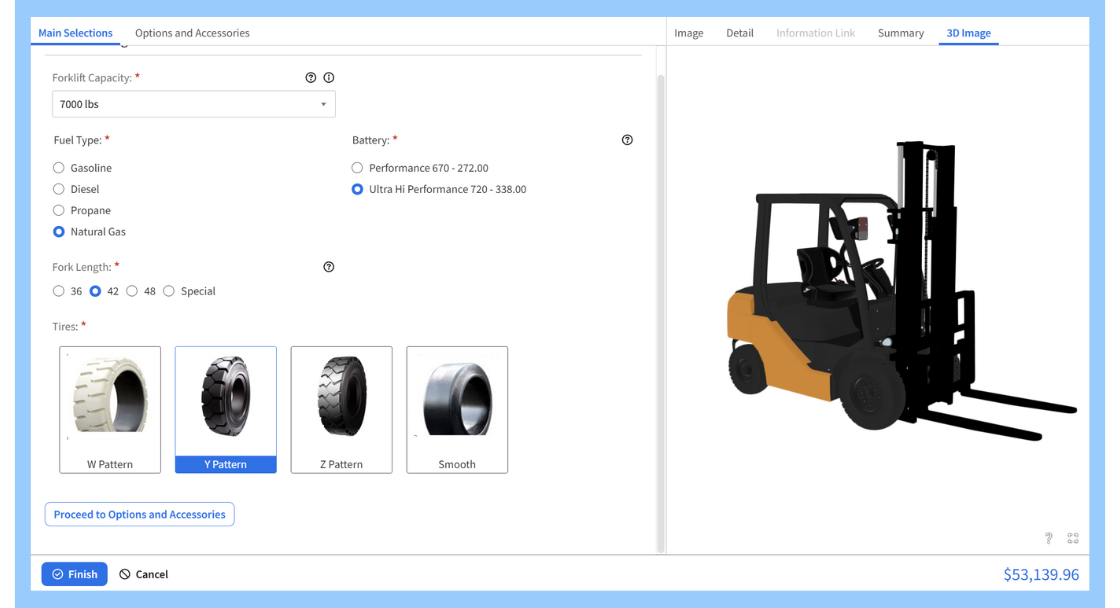
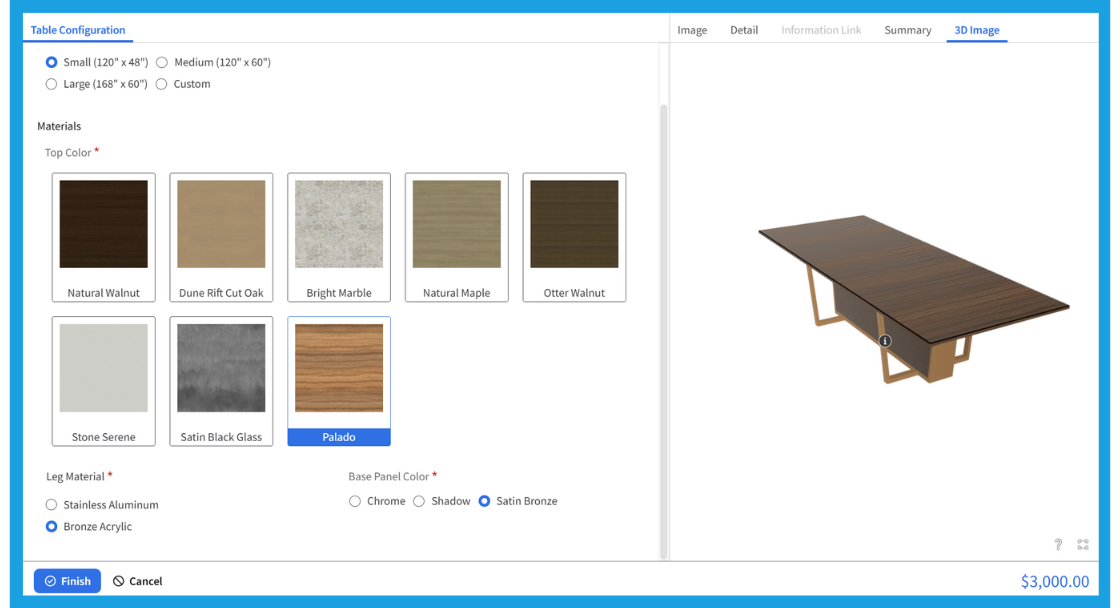
Studies show that 86% of buyers are willing to pay more for a better customer experience. Visuals aren’t just a bonus; they’re a necessity. 3D product configurators create an immersive buying journey by allowing customers to explore, customize, and visualize products in real-time. From augmented reality (AR) integrations to interactive 3D models, these tools enable businesses to stand out in crowded markets where first impressions matter most.
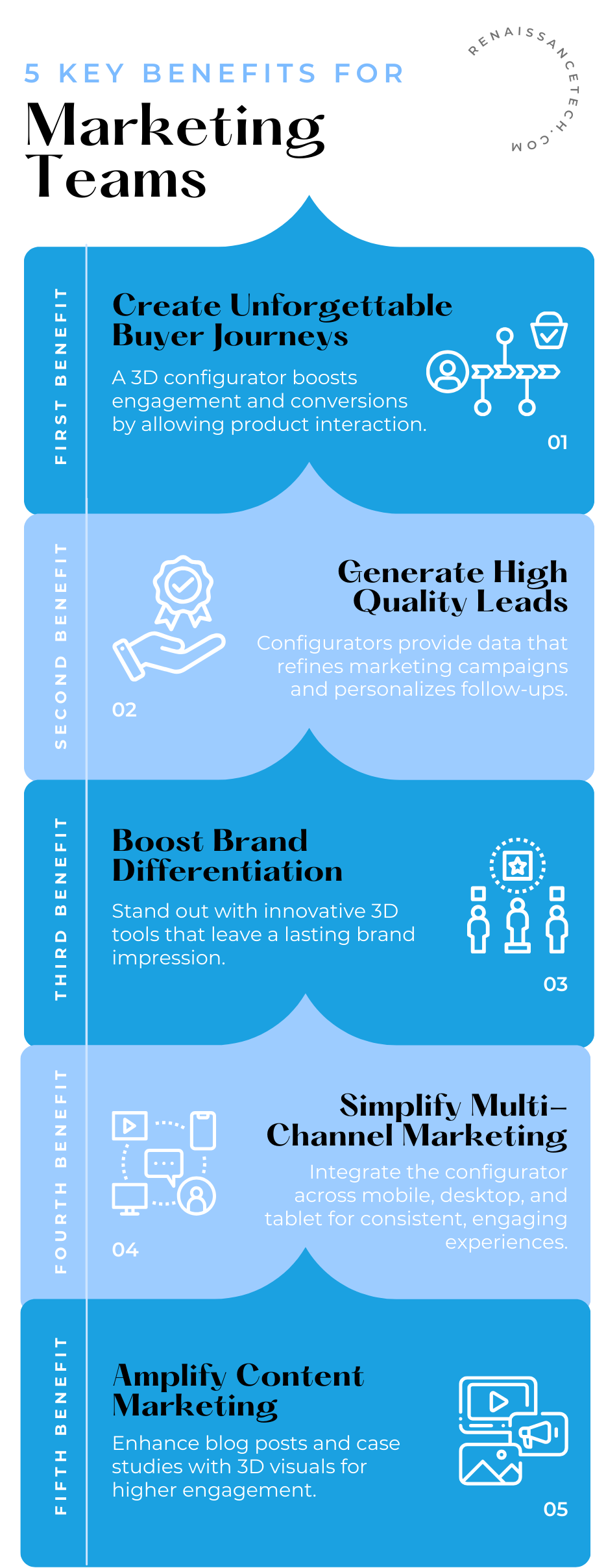
Key Benefits for Marketing Teams
1. Create Unforgettable Buyer Journeys
A 3D product configurator transforms your website into a high-engagement tool, keeping visitors captivated longer and encouraging deeper exploration. When prospects can interact with your products, they’re more likely to move down the funnel, increasing conversions.
2. Generate Higher-Quality Leads
Buyers configuring products provide valuable data—preferred features, price ranges, and design preferences. This behavioral insight helps your marketing team refine campaigns and create personalized follow-ups that resonate with individual prospects.
3. Boost Brand Differentiation
In crowded markets, standing out is a challenge. A 3D product configurator showcases your brand as innovative and customer-focused. Dynamic visuals and interactive tools make your marketing campaigns memorable, leaving a lasting impression on prospects.
4. Simplify Multi-Channel Marketing
Whether your audience engages on mobile, desktop, or tablet, a 3D configurator seamlessly integrates into every marketing channel. Use it in email campaigns, social media ads, and landing pages to deliver cohesive, compelling experiences across platforms.
5. Amplify Content Marketing
3D visualizations can power marketing content, including blog posts, case studies, and customer success stories. Include screenshots or short videos of your configurator in action to bring your content to life and increase engagement rates.
Why Sales Teams Love It Too
A 3D configurator isn’t just a marketing tool; it’s a sales enabler. By automating configuration, pricing, and quoting, it reduces manual tasks, shortens the sales cycle, and enhances buyer confidence. With features like AR and dynamic pricing, customers see exactly what they’re getting, leading to higher close rates and fewer errors.
Real-World Applications
Engineer-to-Order Manufacturing: Simplify complex configurations by letting customers design products visually to their exact specifications.
Retail and Furniture: Allow customers to visualize items in their space using AR technology, ensuring the perfect fit and style.
Industrial Equipment: Provide detailed 3D models and assembly instructions to streamline procurement and usage.
Staying Competitive
By integrating a 3D product configurator, you’re not just improving your sales process, you’re redefining it. Companies leveraging this technology:
Differentiate themselves in competitive markets.
Create immersive, memorable customer experiences.
Drive repeat business and long-term loyalty.
Don’t get left behind. As markets evolve, so must your marketing and sales tools. Whether you’re in manufacturing, retail, or B2B sales, investing in a 3D product configurator is no longer optional—it’s essential.
Closing the Gap Between Browsers and Buyers
The data speaks for itself: businesses using 3D configurators report a 10x faster quote generation and higher customer satisfaction rates. Equip your team with a solution that aligns with modern buyer expectations and makes the path to purchase effortless.
Take the Next Step
Let us guide you to the best 3D product configurator for manufacturers. With our expertise, you’ll gain a solution that aligns with your business needs and fuels your success. Contact us today to set up a time to chat!
In today’s competitive industrial equipment and machinery manufacturing landscape, business process automation allows you to deliver the right product at the right time. Customers demand precision, speed, and customization—not just product variety. To stay competitive, success hinges on accurate product configurations, efficient estimating, and seamless coordination with engineering.
Configure, Price, Quote (CPQ) software solutions empower manufacturers and their dealers, streamlining the path from RFQ (Request for Quote) to order fulfillment. This allows manufacturers to meet customer expectations quickly and accurately, making the entire process—from quote to production—more efficient, scalable and error-free.
This blog explores how CPQ software supports critical business processes such as estimating, engineering, proposals, and order automation, ultimately driving greater efficiency and accuracy.
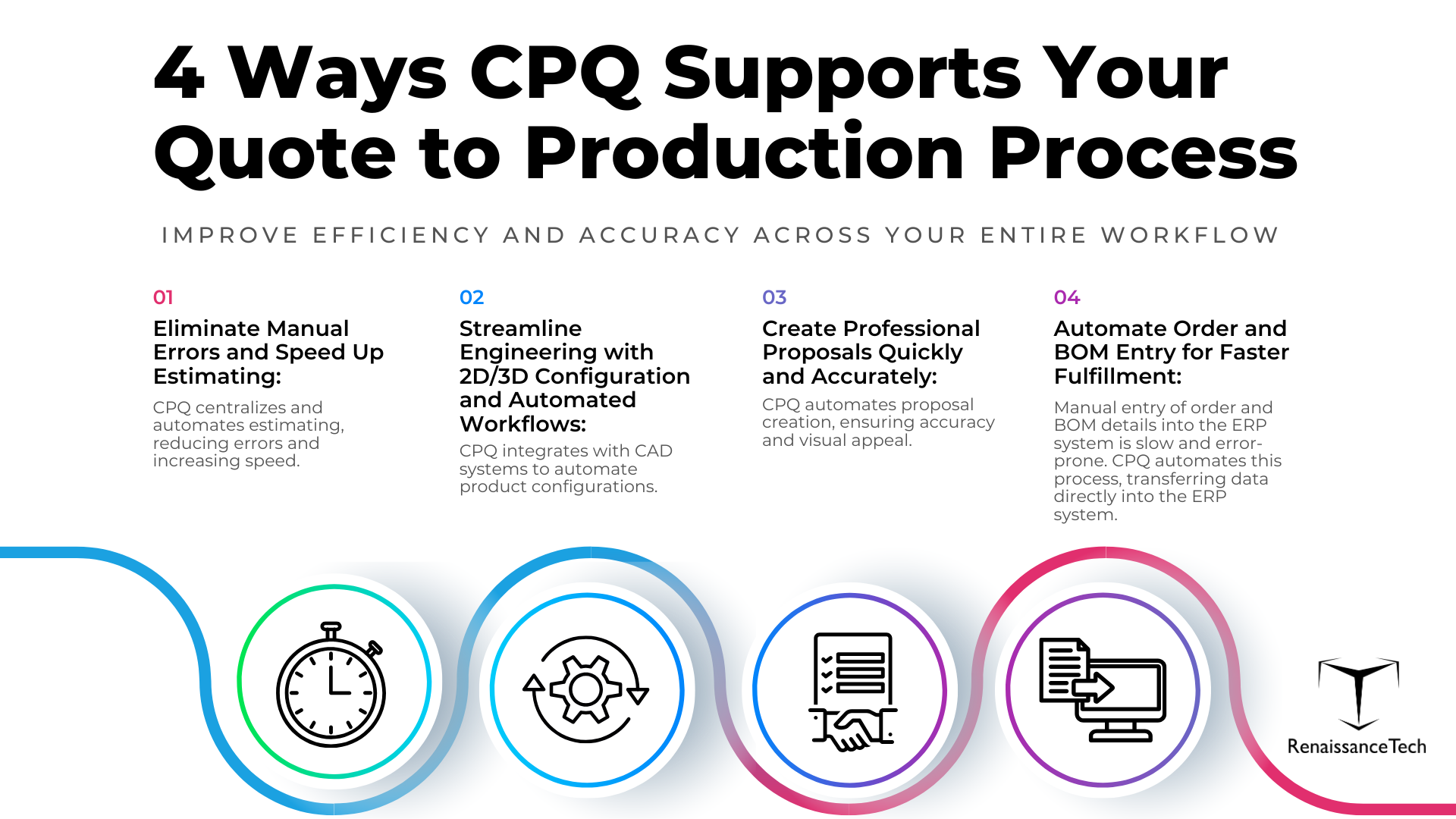
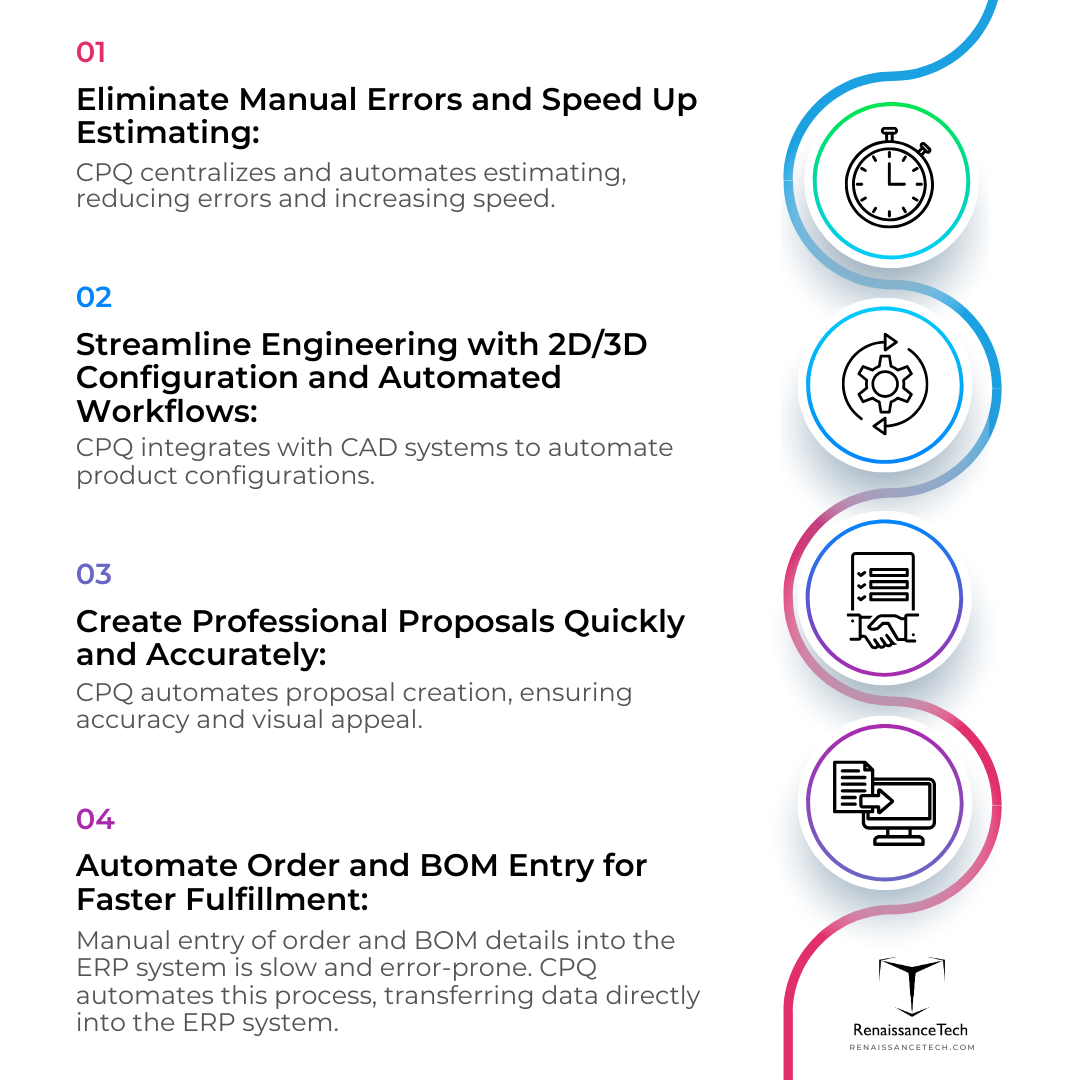
1. Eliminate Manual Errors and Speed Up Estimating with CPQ Software
The estimating process is often one of the most cumbersome tasks in industrial equipment manufacturing. Traditionally, sales & estimating teams rely on spreadsheets to manage takeoffs and estimates, leading to inefficiencies, errors, and delays. Manual data entry and lack of automated workflows often result in incorrect pricing or miscommunications that affect customer satisfaction and project timelines.
With Configure, Price Quote software, you can eliminate these manual processes by centralizing estimating in a user-friendly platform. Sales and customer service teams can quickly and accurately respond to RFQs, replacing Excel-based estimates with real-time, precise calculations. This modernization ensures accurate cost and time estimates right from the start, setting up every project for success.
Here’s how CPQ transforms estimating:
Eliminates Data Entry Errors: Automating the process reduces the risk of mistakes, ensuring that data flows smoothly from one stage to the next.
Centralized Data Access: CPQ consolidates all estimating information to a single system, giving sales teams access to the latest product configurations and pricing in real time.
Increased Speed: With a CPQ solution, you can generate a quote within seconds, enabling your team to respond to customer needs more quickly.
By modernizing the estimating process, your business can eliminate errors and reduce time-to-quote, making the entire workflow more efficient.
2. Streamline Engineering with 2D/3D Product Configuration and Automated Workflows
After estimating, the next challenge is ensuring that the product design aligns with the quote and customer specifications. Engineering teams often rely on manual input, reworking configurations and drawing models based on sales estimates. This process is slow and prone to error, impacting efficiency and product timelines.
With Infor CPQ, manufacturers can automate product configurations and integrate them directly with 2D and 3D CAD systems. This integration ensures that engineers have precise, real-time data from the sales phase, enabling them to generate accurate designs without manual rework.
Key benefits of CPQ for engineering include:
Automated Configurations: CPQ automates complex product configurations, reducing the need for manual data entry and ensuring accuracy.
Real-Time Data Synchronization: Engineers can access up-to-date information directly from the CPQ system, ensuring everyone is working with the same, most current data.
Faster Design Process: By eliminating redundant work, engineers can focus on refining designs rather than recreating data from spreadsheets, speeding up time-to-market.
Integrating CPQ with CAD systems and engineering workflows accelerates the design phase, enabling engineers to focus on creativity and innovation while reducing the risk of errors in configuration and CAD drawings.
3. Create Professional Proposals Quickly and Accurately
A well-crafted proposal is crucial for winning business, especially in industries with highly customizable products. The challenge is to ensure that every proposal is accurate, professional, and reflects the latest pricing and product options. Manually creating proposals is time-consuming and error-prone, leading to delays in response and a negative customer experience.
With Infor CPQ, sales teams can automate and streamline the proposal process. The system ensures that proposals are not only accurate but also visually appealing, with real-time pricing and 3D product visuals included. This helps build trust with customers and improves the chances of securing orders.
How CPQ enhances proposals:
Real-Time Pricing and Configurations: CPQ automatically updates proposals with the latest pricing and product details, ensuring they’re always accurate.
Product Visuals: Including 3D models or detailed product photosin proposals helps customers visualize their purchase, improving the buying experience.
Faster Response Time: By automating proposal creation, sales teams can respond to customers faster, improving lead times and increasing competitiveness.
With CPQ, your sales team can deliver polished, accurate proposals quickly, making it easier to close deals and build stronger customer relationships.
4. Automate Order and BOM Entry for Faster Fulfillment
Once a proposal is accepted, the next critical step is to ensure that the order data flows seamlessly into production. Traditionally, this process involves manually entering order details, including the Bill of Materials (BOM) and routing configurations, into the ERP system. This approach is time-consuming and prone to errors, leading to delays and inaccuracies in production.
With Infor CPQ, this process is automated, ensuring that once an order is confirmed, all relevant information flows directly into the ERP system. CPQ automatically transfers BOM details and routing configurations, eliminating manual entry and ensuring accuracy, so production can begin immediately.
Here’s how CPQ benefits order and BOM entry:
Reduced Manual Data Entry: By automating the entry of BOM and routing data into the ERP, CPQ eliminates the need for manual input, saving time and reducing errors.
Improved Accuracy: CPQ ensures that the BOM and routing details are accurate and aligned with the latest product offerings, preventing discrepancies.
Faster Production Start: Automated integration ensures that manufacturing teams have accurate information to start production immediately, avoiding delays.
By automating the transfer of data from sales to production, CPQ enables powerful manufacturing workflows that enhance business process and reduce the likelihood of errors, ensuring timely delivery of orders.
Conclusion
Incorporating CPQ software into your business process transforms your ability to estimate, configure, quote, and fulfill orders accurately and efficiently. From modernizing estimating and empowering engineering with precise configuration data, to creating winning proposals and automating order processing, CPQ enhances every stage of the process. By streamlining critical workflows, CPQ helps your business become more agile, responsive, and competitive. With faster turnaround times, and greater accuracy, CPQ ensures your business can consistently deliver on customer expectation while improving operational efficiency.



















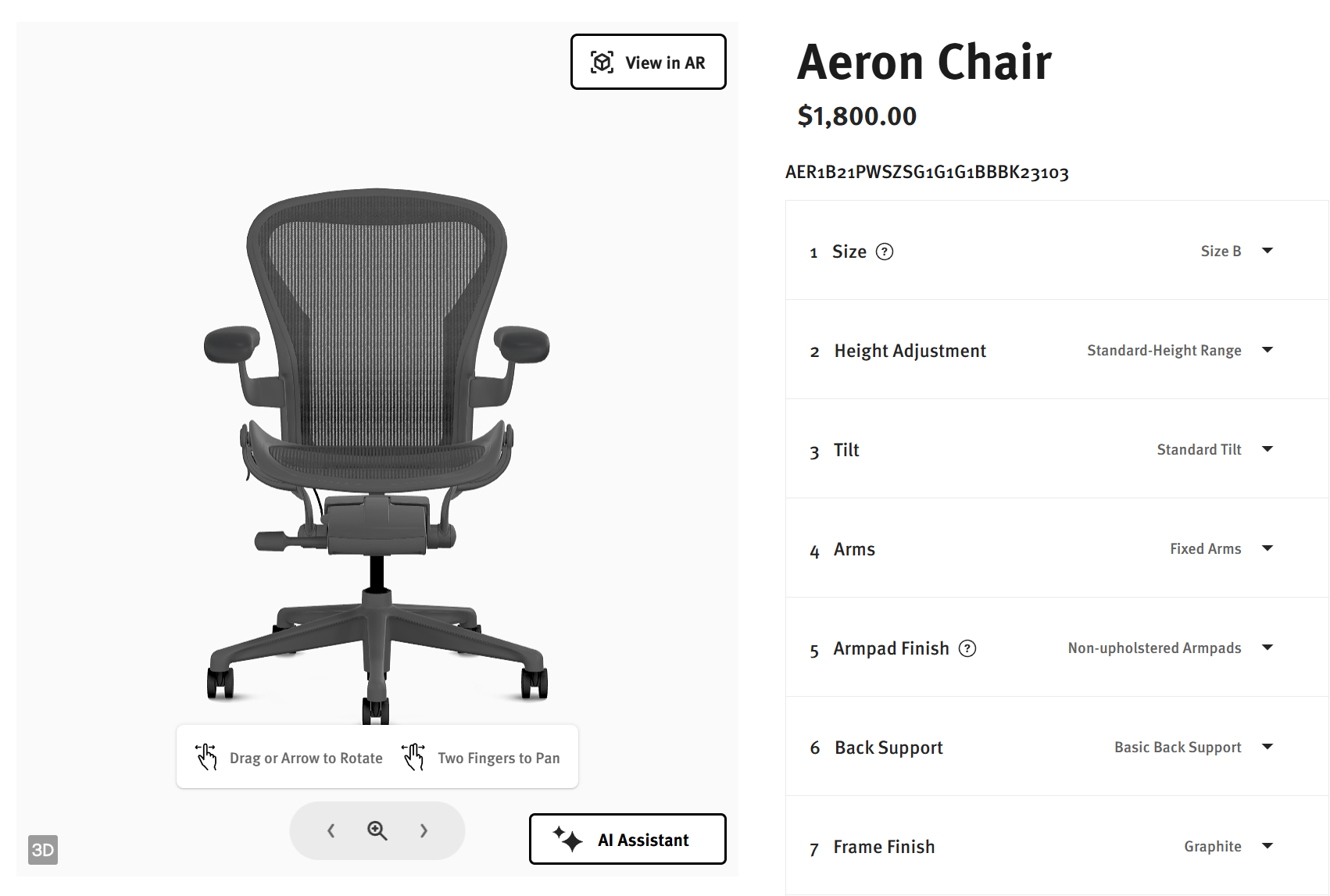
 “Our Aeron chair, our most iconic chair, has 6 million SKU capabilities [options]. We are dealing with a ton of options on all of our products, we have lots and lots of data that feeds into

 Tucker Door has been in the business of delivering high-quality doors and windows for decades. But, like many companies in the building materials industry, they hit a point where their sales process just wasn’t keeping up. Their old system was clunky, outdated, and made getting quotes out the door way harder than it needed to be. They knew it was time for a change.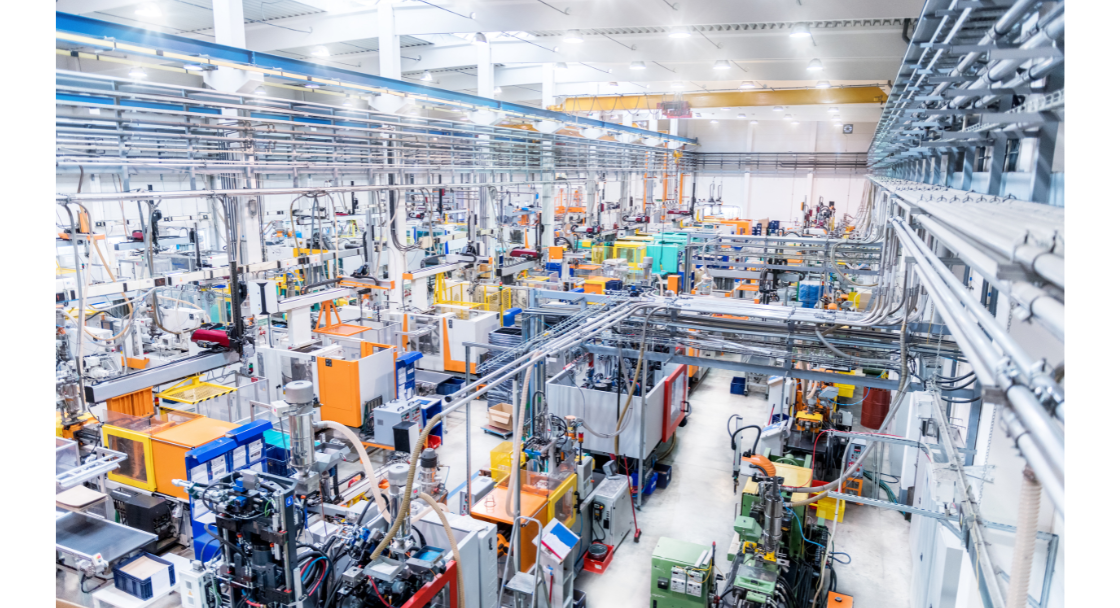

 Why Visual Engagement Matters
 Key Benefits for Marketing Teams