In the dynamic landscape of the equipment manufacturing industry, the way buyers navigate their journey has evolved significantly. Today, customers demand more than just products; they seek a seamless, personalized, and transparent experience. The answer to meeting these heightened expectations lies in the power of CPQ, which have become the industry’s not-so-secret weapon, reshaping the interactions between businesses and buyers.
Unveiling the CPQ Advantage
Modern CPQ solutions seamlessly integrate into your operations, streamlining the selling and quoting process. But that’s just the tip of the iceberg. CPQ transcends the ordinary, offering a tailored buying and selling experience that benefits both you and your customers.*
The Highlights of CPQ’s Impact:
Tailored Solutions: With CPQ, equipment manufacturers have the capability to quote custom solutions. Dealers and representatives can configure products precisely to meet their requirements, ensuring they receive equipment that perfectly aligns with their needs.
Transparency and Accuracy: CPQ guarantees transparency throughout the quoting process. Buyers can access detailed, error-free quotes, reducing misunderstandings and disputes. This precision nurtures trust and streamlines negotiations.
Speed and Efficiency: CPQ optimizes the sales process, providing buyers with quick access to quotes. This efficiency is paramount in an industry where minimizing downtime is of utmost importance.
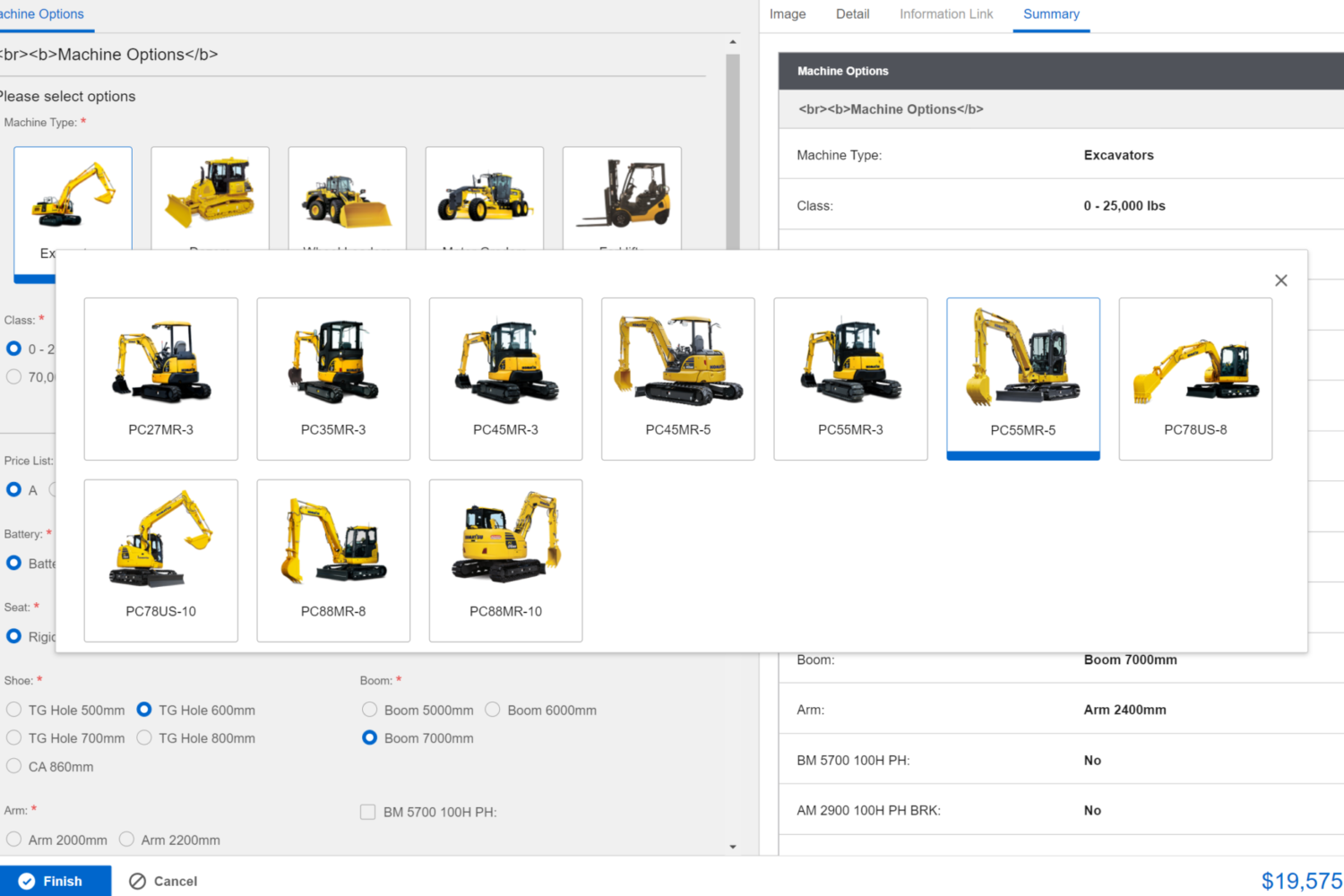
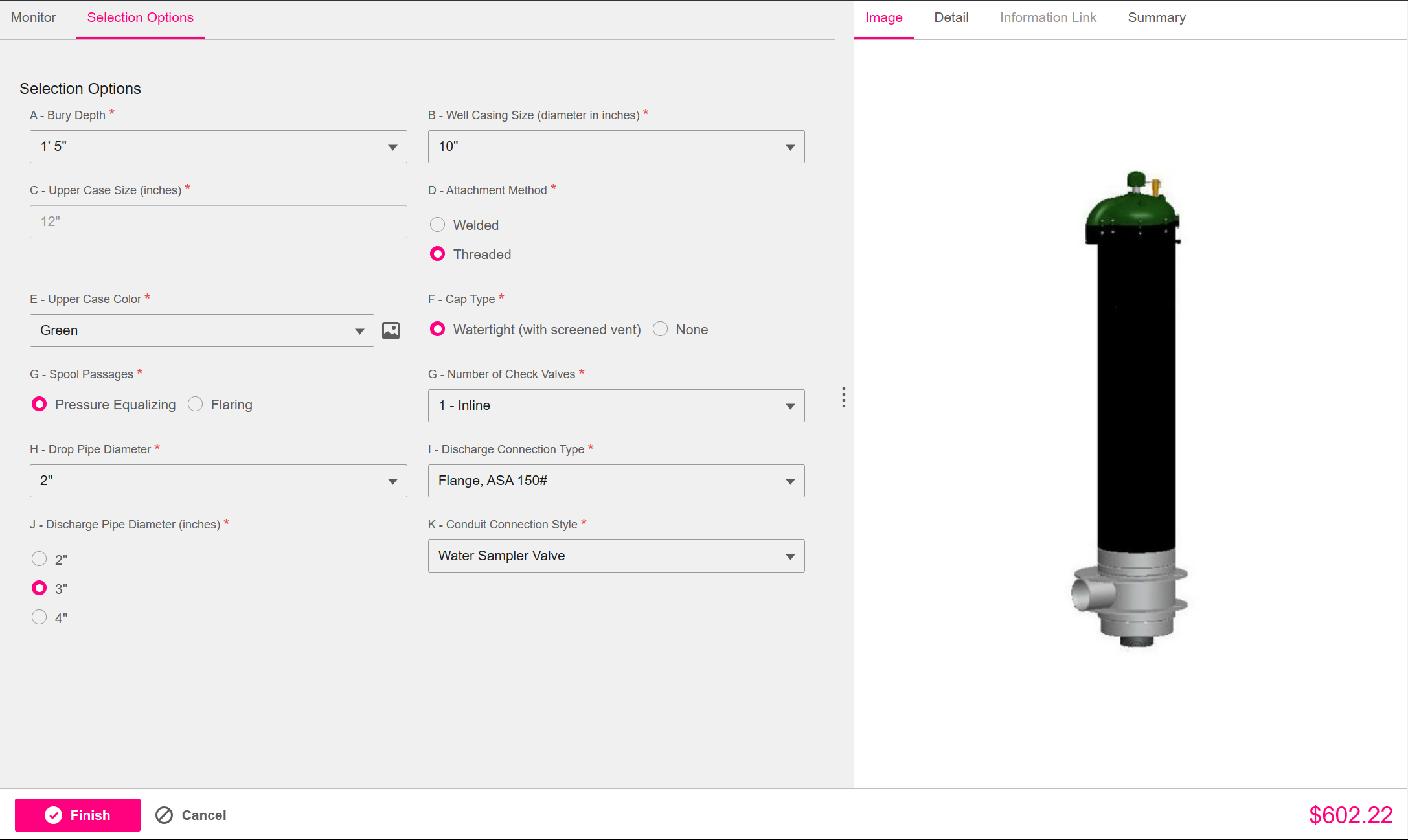
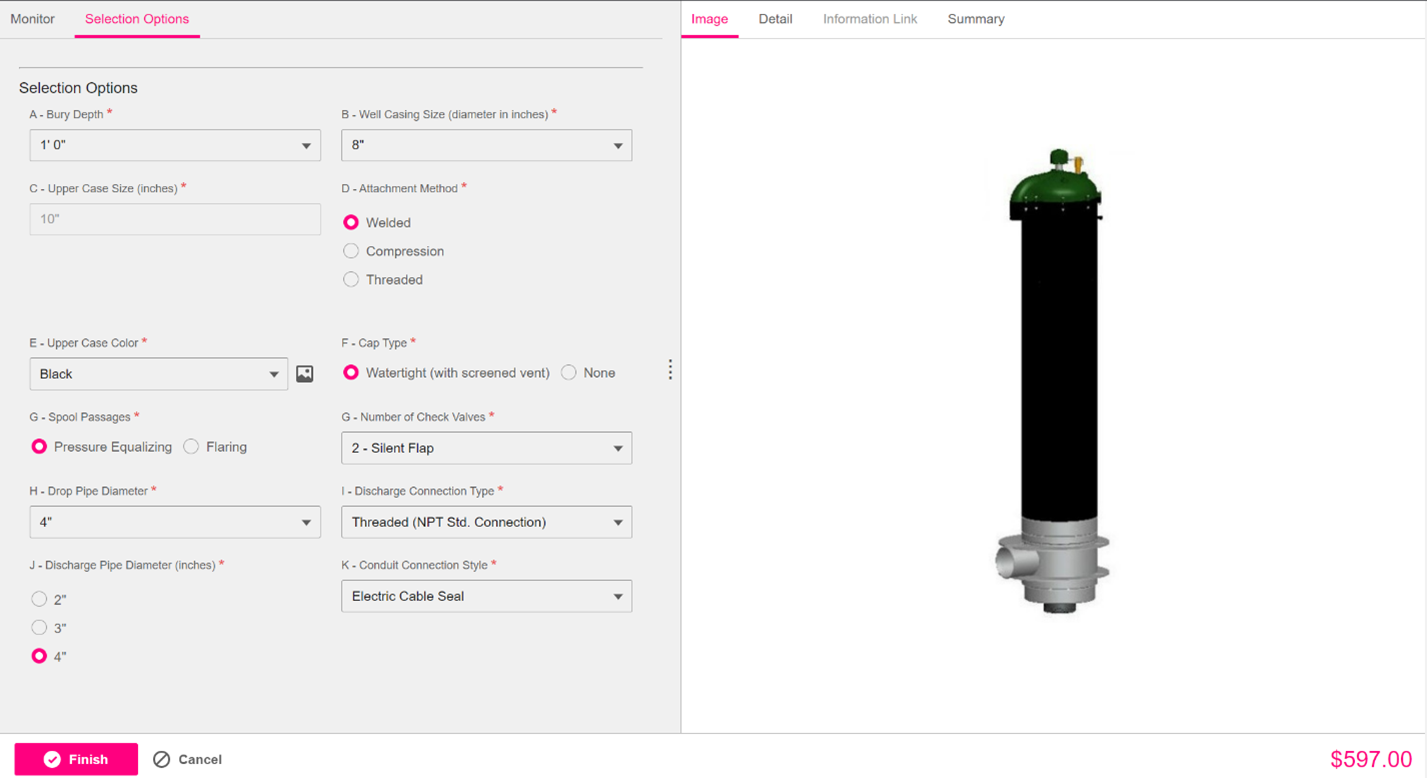
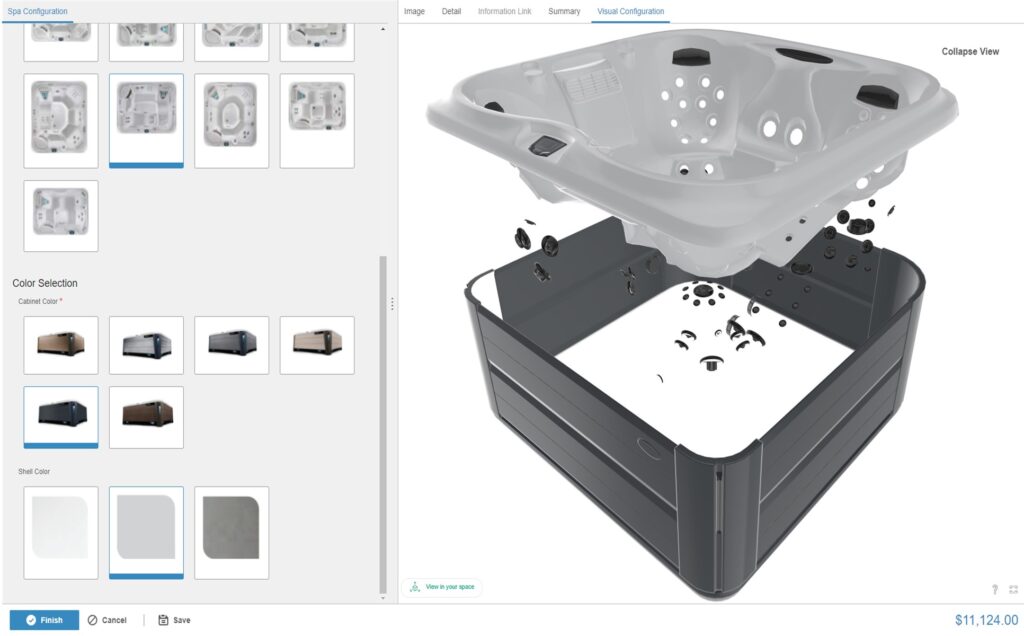
Visual Configuration: Many CPQ solutions provide a visual product configuration feature. It empowers buyers to visualize how the equipment will look and function in real-time, facilitating decision-making and enhancing understanding.
Mobile Accessibility: CPQ is readily accessible on mobile devices, allowing buyers to explore options and request quotes on-site or in the field. This mobile accessibility is a boon for industries reliant on field equipment.
Upselling and Cross-Selling: CPQ systems excel in suggesting complementary products or upgrades, creating more sales opportunities and aiding buyers in making informed choices.
Self-Service Options: Certain CPQ platforms offer self-service capabilities, allowing buyers to independently explore equipment options. This empowers buyers and saves them time.
Streamlined Documentation: CPQ automates the generation of contracts, invoices, and other documentation, reducing administrative overhead for both buyers and sellers.
Data-Driven Insights: CPQ equips you with valuable data and analytics that inform future product development and pricing strategies. This data-driven approach nurtures long-term customer relationships.
After-Sales Support: CPQ’s benefits extend well beyond the initial sale. Post-purchase, customers can utilize CPQ to order spare parts or request support, further enhancing the overall experience.
In the equipment industry, CPQ is not just another tool; it’s a bona fide game-changer. It’s reshaping the buyer experience by offering tailor-made solutions, enhancing transparency, and expediting the sales process. As customer expectations continue to soar, implementing CPQ is no longer a choice; it’s a necessity to remain competitive and provide a buyer experience that sets your equipment business apart.
At its core, CPQ stands for Configure, Price, Quote. It’s a technology-driven solution designed to simplify the process of creating accurate and customized quotes for customers. CPQ systems empower sales teams to configure complex products or services, determine accurate pricing, and generate quotes quickly—all while ensuring consistency, accuracy, and alignment with business rules, but let’s dive into just how this is all powered.
The Core Components of CPQ Systems:
Product Configuration Rules: At the heart of CPQ systems lies the product configuration rules. These rules define what combinations of product features and options are permissible and feasible. For instance, with the guided selling process if a customer selects a specific feature, the rules engine will ensure that incompatible options are not included in the configuration. This not only ensures accuracy but also prevents unrealistic or non-manufacturable combinations.
Pricing Algorithms: Determining the right price for a customized product can be a labyrinthine task. CPQ systems simplify this challenge with advanced pricing algorithms. These algorithms consider a multitude of factors, including material costs, labor, market conditions, and even competitor pricing. The result is a price that is not only competitive but also aligned with the company’s profitability goals.
Quoting Templates: Crafting a professional and comprehensive quote is an art. CPQ systems provide quoting templates that guide sales representatives in presenting information to customers. These templates could include documents, drawings, legal terms, and a breakdown of the product’s features, pricing, and options. Quoting templates ensure consistency in communication and reflect the company’s branding and professionalism.
How CPQ Systems Work
Input of Customer Requirements: Users, typically sales representatives, input the specific requirements and preferences of the customer into the CPQ system. This could include the desired features, quantities, specifications, and any unique customization requests, inventory on hand or availability in that defined market.
Configuration and Rule Application: The CPQ system’s configuration engine processes the customer’s inputs and applies the predefined configuration rules. It then generates a feasible and accurate product configuration that aligns with the customer’s needs. This could be products, process or systems.
Pricing Calculation: Once the configuration is determined, the pricing algorithms come into play. They factor in all relevant considerations, including costs, discounts, and pricing strategies. The pricing information can be used and stored globally across all departments for a single source of truth. Pricing information is also permission based. Allowing further control and personalization.
Quote Generation: With the accurate configuration and pricing in hand, the CPQ system assembles this information into a professional quote. The quoting template can be personalized to your business needs.
Integration Capabilities: CPQ systems often integrate with other business systems like Customer Relationship Management (CRM), Enterprise Resource Planning (ERP), and Product Lifecycle Management (PLM) systems. This integration ensures that data is consistent and up-to-date across the organization.
Conclusion
By using CPQ manufacturers of custom and complex products can turn daily challenges into opportunities to provide custom tailored products or solutions to their customers quickly, seamlessly, and confidently while maintaining operational efficiencies and customer satisfaction.
In the future, CPQ (configure, price, quote) systems are expected to leverage artificial intelligence (AI) in several ways to enhance their capabilities. Here are 5 ways AI could be leveraged in CPQ systems:
1. Intelligent Product Recommendations with AI and CPQ:
AI algorithms can analyze customer data, preferences, and historical purchasing behavior to provide personalized and intelligent product recommendations. By understanding customer needs and preferences, CPQ systems can suggest the most relevant and suitable products, options, and configurations, increasing the likelihood of upselling and cross-selling.
Get in Touch with the CPQ Experts
Our team has been doing this for a long time, and we want to help you with all your Infor CPQ tools and quote system needs. Please contact us today, or fill out the form below and we will reach out to you within one business day!
AI can automate the configuration process by utilizing machine learning algorithms to analyze and understand complex product configurations. It can learn from historical data to predict the most optimal configurations based on customer requirements and constraints, saving time and reducing errors. AI-based product configurators can revolutionize how businesses handle complex configurations.
3. Voice-Enabled CPQ:
With advancements in voice recognition technology, AI-powered CPQ systems can enable voice commands and interactions. Users can verbally specify their requirements, ask questions, or make changes to configurations, making the process more intuitive and convenient.
4. Sales Analytics and Predictive Insights:
AI can analyze sales data and patterns to provide valuable insights and predictions for sales teams. It can identify trends, customer behaviors, and market opportunities, enabling sales representatives to make data-driven decisions and optimize their quoting and selling strategies. AI quoting software can transform how sales teams approach their tasks.
5. Dynamic Pricing Optimization:
AI-powered algorithms can analyze various factors such as market demand, competitive pricing, customer profiles, and historical sales data to optimize pricing strategies. CPQ systems can use AI to dynamically adjust prices based on real-time market conditions, customer segmentation, and business objectives, ultimately maximizing revenue and profitability.
Final Thoughts on the Future of AI and CPQ
As artificial intelligence use grows people will start to ask: Does AI have the potential to assist in writing CPQ rules? While it is unlikely to completely replace the need for human involvement in rule creation and management, AI can be leveraged to analyze large datasets, identify patterns, and make recommendations for rule configurations. It can also automate certain aspects of rule generation based on predefined criteria. This can save time and provide insights to rule designers, helping them make more informed decisions. Artificial intelligence will become a valuable tool for the future of CPQ software's rules development and data insight.
About RenaissanceTech
RenaissanceTech specializes in the implementation, integration, and training of Infor’s Configure Price Quote (CPQ) software. They assist businesses in numerous industries by simplifying their sales cycles with advanced quoting and ordering tools. Founded by Ben Karam and Jeremy Finley, RenaissanceTech leverages over 30 years of CPQ experience. Their commitment to customer-first service has led to over 200 successful projects, enhancing accuracy and efficiency in the design and manufacturing processes.
Interested in Learning More about AI and CPQ? Contact Us Today
Have additional questions about the power of CPQ or creating rules? Contact us to learn more!
Selecting a new Configure Price Quote (CPQ) system is a big decision. This decision requires forethought for how you do business today and what your company wants for its future. Using a few key CPQ software selection criteria for configuration tools, you can find the right solution to grow your business.
There is a wide range of cloud configurators available to many different types of businesses. By defining clear selection criteria for CPQ solutions, you can easily narrow down a list of candidates that will fit your business best.
Portrait of a worker at large metal industry workshop.
Important Criteria for CPQ Software Selection
You’ll first want to think about where your business is and its future growth trajectory. Your CPQ system can be as light or robust as the products and businesses you support. It’s best to take into consideration a CPQ tool that includes a future-oriented perspective.
Company resources - It's important to note your company’s current operations, people, and processes. Also, consider the impact of a new system on company resources. What tasks can you automate with CPQ implementation or a new system? Putting new systems in place will require implementation time that should provide a future payout for your company resource goals.
Cost - The cost of a new ERP system is certainly a factor in your decision. As you compare the costs of CPQ systems, be sure to look at the ROI (return on investment) and proven automation capabilities of each cloud configurator.
Cloud vs. on-premise - Many companies are turning to Cloud CPQ because of its updated infrastructure, security advantages, and flexibility. CloudSuite CPQ solutions eliminate the need for ongoing investment in in-house servers. For more information on cloud vs. on-premise CPQ solutions, check out: Cloud vs. On-Premise CPQ: Key Differences, Risks, and Benefits
Implementation support - As stated above, your CPQ implementation effort is a major factor when selecting a CPQ system and can dictate how fast your software returns investment. That’s why choosing a reliable CPQ partner with industry experience, technical knowledge, and project management skills is critical. The greatest CPQ implementation partners have a deep understanding of companies similar to your own and have current customers providing excellent results and references. Above all, think of this as a critical decision for a working relationship in your CPQ software selection process.
Schedule a Meeting with Our Cloud Configurator Experts
As you dig into your CPQ selection process, we would like to offer our support in discussing your business’s goals and objectives for CPQ. Please feel free to schedule a meeting with one of our CPQ experts today.
Everybody wants options and giving your customers options drives sales. Does your sales team have the flexibility to offer them?
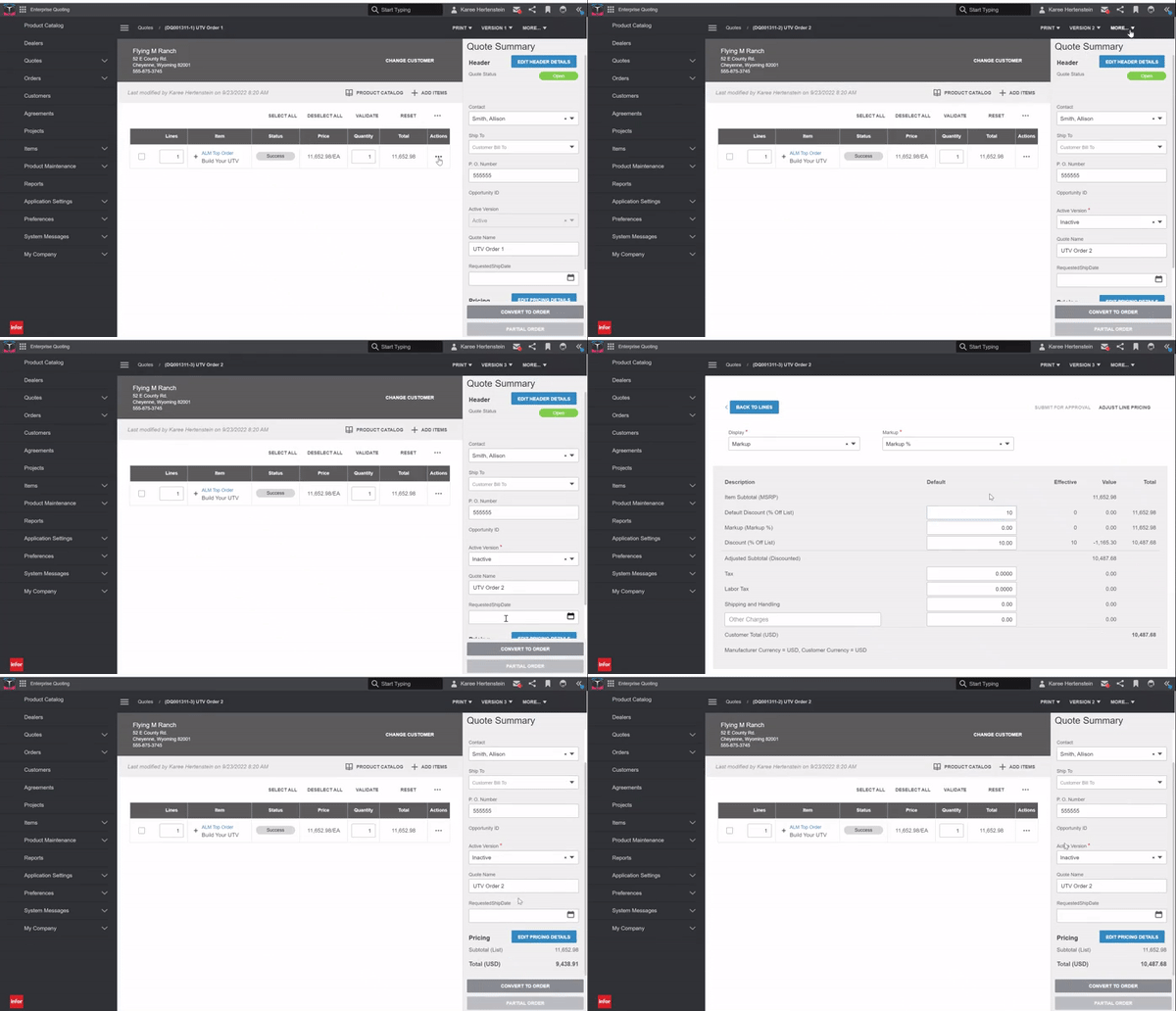
If your sales process, like most, involves negotiating you need a manufacturing CPQ that gives flexible quoting capabilities. Infor’s cloud CPQ offers countless features that support sales automation for manufacturers, giving your sales team tools to configure products that range from simple to deeply complex. One of these features is called Quote Versioning.
Sales quote versioning allows a method of tracking any iterations to your quotes. This is especially helpful when dealing with negotiations with your customers in the sales cycle.
Sales quote versioning in Infor cloud CPQ allows you to create many versions of the same quote to allow for discounting, price changes, or variations in the product itself. A customer may, for instance, want to see formal, separate quotes for multiple iterations of the same product. You can provide all of these different quotes, easily track your changes, and then finally place the order for the quote your customer decides on.
In other scenarios, your sales reps may need the flexibility to offer pre-set discount options to win business. You set the discount rates to ensure you meet your bottom line, while your salespeople gain the ability to offer these discounts on a discretionary basis. Each time a discount is applied, the salesperson creates a new version of the quote so you can easily track the history of the proposal process. Once the customer makes a final decision, the salesperson places the order on the selected quote version and all other versions are closed out null and void so as not to affect win/loss rate in your quoting analytics.
It's time for a sales solution that gives manufacturers more options. See how the CPQ industry is changing the game for manufacturers and what we can do for you. Contact us for a product demo of the best CPQ for manufacturers!
Are you utilizing product imagery in your sales process? It’s no secret that the need for product visuals has become more than an added benefit in sales but is now a necessity. In fact, 83% of buyers point to product images as the most influential factor in the online purchasing process.
The sophisticated end buyer of today, however, is trending towards options with visual engagement. Infor CPQ provides options for your customer experience. Here are the top 5 ways our customers are utilizing a product configurator with visuals.
Product Images
A simple, static image is usually the first thing that catches the buyer’s eye. Give each of your products a starting image so customers can easily understand what they’re configuring to purchase.
2. 2D drawings
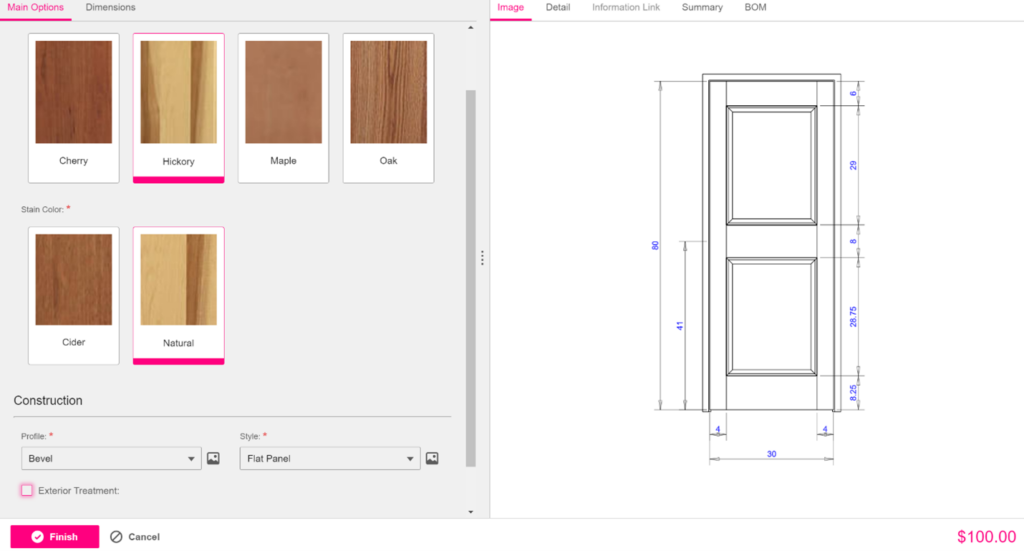
We support your sales and engineering process with the usage of 2D CAD drawings. Customers select their products and dimension specifications and see their product drawings update dynamically.
3. Interactive 3D
Your customers have attention to detail—let them explore, zoom, and examine your product with Infor Cloud CPQ’s interactive 3D.
4. 3D Assemblies
Do you utilize 3D CAD models in the quoting or ordering process? Support both the sales and manufacturing side of your business by allowing assembly of 3D CAD models during configuration.
5. Augment Reality
CPQ with Augmented Reality (AR) is an exciting way to engage with your buyers. Your customers gain assurance with the ability to place the end product in a physical space.