Infor's CPQ is known for its system agnostic nature, making it versatile and capable of seamless integration with a wide range of existing systems within your organization. Let’s look at 4 integrations include Infor's Suite of ERP products, Sage, D365, Salesforce.
1. Infor's Suite of ERP
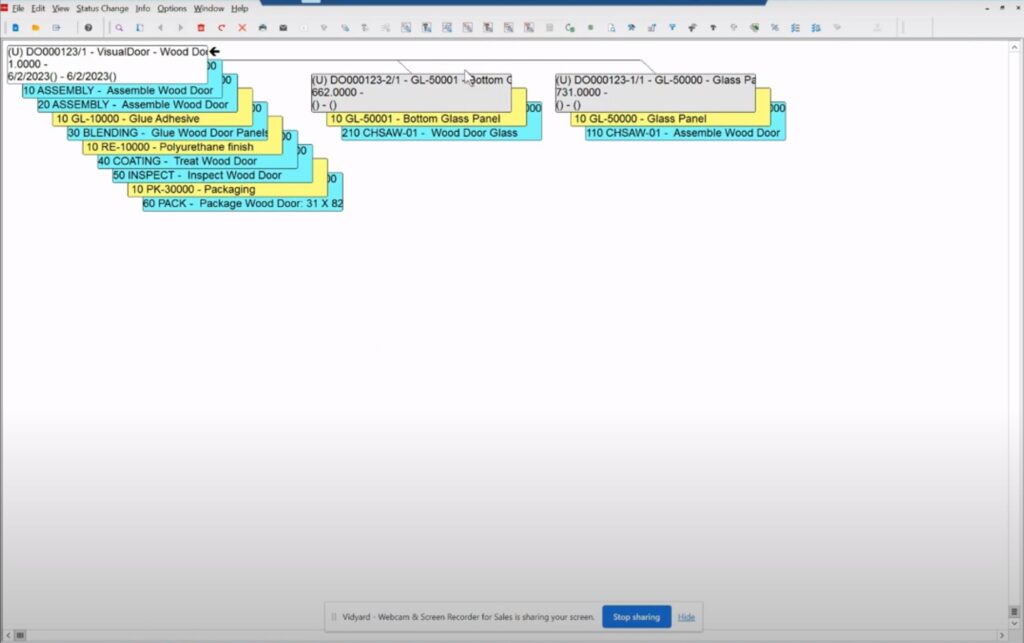
Infor's CPQ offers native integration with all of Infor's ERP Suite products, ensuring a streamlined and effortless connection between different departments, including sales, manufacturing, and finance. These native systems include: InforLN, Visual ERP, Syteline, InforXA, Distribution, and more. This real-time data synchronization guarantees that your sales team has access to accurate product information, pricing, and order statuses, facilitating faster and more precise quoting processes.
2. Salesforce
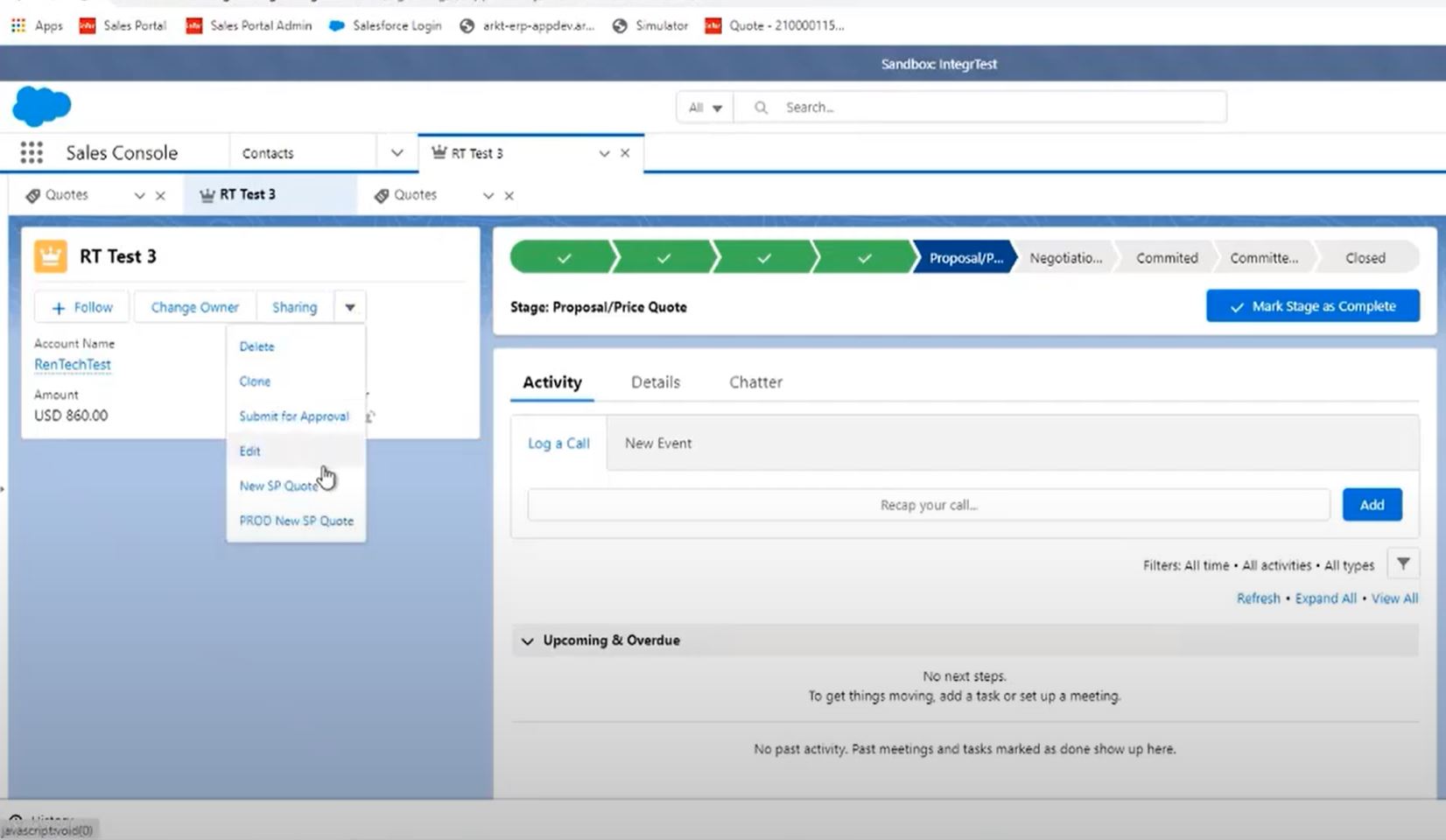
Another highly sought-after CPQ integration is with Salesforce. By integrating CPQ directly into Salesforce, your sales team gains the advantage of working from a single platform, eliminating the need to switch between different systems. This leads to a vast number of process improvements, including:
Accelerated Sales Cycles:
With streamlined processes and real-time information at their fingertips, your sales team can respond quickly to customer inquiries, resulting in shorter sales cycles.
Accurate Quotes and Pricing:
The integration ensures that product configuration and pricing data remain consistent, reducing the chances of errors in quotes and pricing.
Streamlined Order Management:
The integration simplifies the transition from quotes to orders, automating the order entry process and reducing the likelihood of errors in the process.
Enhanced Customer Experience:
By providing prompt and accurate quotes, along with personalized product configurations, your sales team can deliver a superior customer experience, fostering customer loyalty and repeat business.
3. Dynamics 365 ERP
Integrating D365 and Infor CPQ provides a powerful tool for managing your sales cycle. Connecting ERP and CPQ data keeps your entire team on the same page. Sales reps and dealers can have views into ERP data such as: order statuses, quantities, and product updates. Keeping your entire team and enterprise systems connected is vital for ROI and scrap reduction.
4. Sage 100
The newest standardized integration for Infor CPQ is with Sage100 ERP. This integration connects the same information as Infor's suite of ERP integration and provides similar features. Eliminating the need for order entry and human error is a driving benefit of Infor CPQ and Sage's integration
Integrating Infor's CPQ with your ERP system is a strategic move that can revolutionize your sales processes and positively impact your bottom line. By leveraging real-time data synchronization and empowering your sales team with accurate information, your organization can achieve greater efficiency, customer satisfaction, and a competitive edge in the market.
Enterprise resource planning (ERP) has become a necessity for manufacturers like you. However, a thriving market for ERP solutions has pulled many decision makers into the so-called ‘paradox of plenty': with so many software choices available to you, how can you make the best decision?
Selecting an ERP can be a time-consuming, confusing and stressful process. The four tips below can help your manufacturing business get to the ERP decision point in less time. We also think that you'll have far greater confidence in the decision you make. Here we go!
1 . Find an ERP that's designed for your industry and business model
The widest part of the ERP ‘funnel' is industry. Sure, you can find an accounting program with a manufacturing module or two; but any manufacturer at scale needs to filter out ERPs that are not specifically designed for the industry. That's because manufacturers need an ERP to manage complexities such as scheduling, work in process, inventory, customer service, financials and so on. There's simply too much at stake for manufacturers to look elsewhere or make do with less.
The next step is to drill into those manufacturing-specific ERP solutions that best align with your business model. ERP manufacturing solutions are available for process and discrete manufacturing; make to order and make to stock; engineer to order and configure to order; and so on. Your company can benefit from using a solution that has been developed over many years with input from manufacturing end users like you.
An important caveat: don't go with an exotic solution that is not well-supported by others. There's no shortage of intelligent people with great ideas in this world, but you don't want to risk being part of a business or technical experiment gone wrong.
2. Make sure the ERP can help your company improve customer service (as you define it!).
Customers pay the bills. The ERP must empower you to work more closely, collaboratively and sustainably with customers. For example, a good customer relationship management (CRM) application is useful for tracking business communications within the customer service, marketing and sales groups.
Manufacturers, of course, have customer service challenges that are greater than most. Most customers won’t award their business unless you can quickly turnaround quotes that include accurate delivery dates. Customers often inquire about job statuses, change orders, compliances and so on. For these reasons, enterprise-wide access to data is critical. When your employees are empowered to quickly, accurately and completely answer your most demanding customer's inquiries, then your business gains advantage over others who can't do the same.
Sometimes, the computer reseller's responsiveness to your request is telling. Are the reseller's representatives attentive? Do they provide accurate, timely information to you? If not, then the reseller may not have the solution you need. After all, how can the reseller credibly implement a best practices solution for you when they can’t do it for themselves?
3. The solution must be adaptable, configurable and scalable
Manufacturers must be able to quickly adapt to unforeseen circumstances. Some events may not be under their control. For example, an environmental catastrophe in a distant land could disrupt the global supply chain in unexpected ways. You might gain an opportunity to win new business as customers scramble to find new suppliers - but you might be presented with that very same challenge, too!
That's why manufacturers demand ERP solutions that are adaptable to changing business conditions, configurable to industry standards and scalable to support your growing business needs.
It's an accepted best practice to ask the prospective ERP vendor fair but tough questions. Ask for an on-point demonstration about how the solution can support you when you need it the most.
4. The ERP must support ‘smart' manufacturing.
At this point, you should have narrowed the list of prospective ERPs in the funnel to just a few. These ERPs are designed for your industry and specific business model. These ERP will help you improve customer service. It's adaptable, configurable and scalable. In short, you believe these ERPs will support your company as it navigates through ever-changing business conditions.
There’s one more thing to consider. The future is arriving fast. Any investment in ERP that is worth making today must include the ability to support your smart manufacturing needs tomorrow.
Most manufacturing industry consultants agree that analytics is a good first step into smart manufacturing. Decision makers can be empowered with real-time access to data that is displayed to them using ‘executive dashboards'. These tools are useful for presenting data to ordinary end users, too. We've seen manufacturers reap significant gains in productivity, efficiency and teamwork when analytics are available on displays throughout the plant in order to help workers stay on task.
Going forward, you'll want to challenge the reseller to communicate the software supplier's go-forward plan to support your long-term factory automation goals. Look for a solution provider who can talk knowledgeably about the challenges your company faces - not just today, but tomorrow, too.
Contact our industry experts to learn how to build a foundation for Smart Manufacturing and gain a competitive edge.
This article is guest content from our Infor ERP Partners, Synergy Resources. Synergy Resources has helped hundreds of manufacturing companies achieve their business goals with innovative, manufacturing-specific ERP software solutions and services.